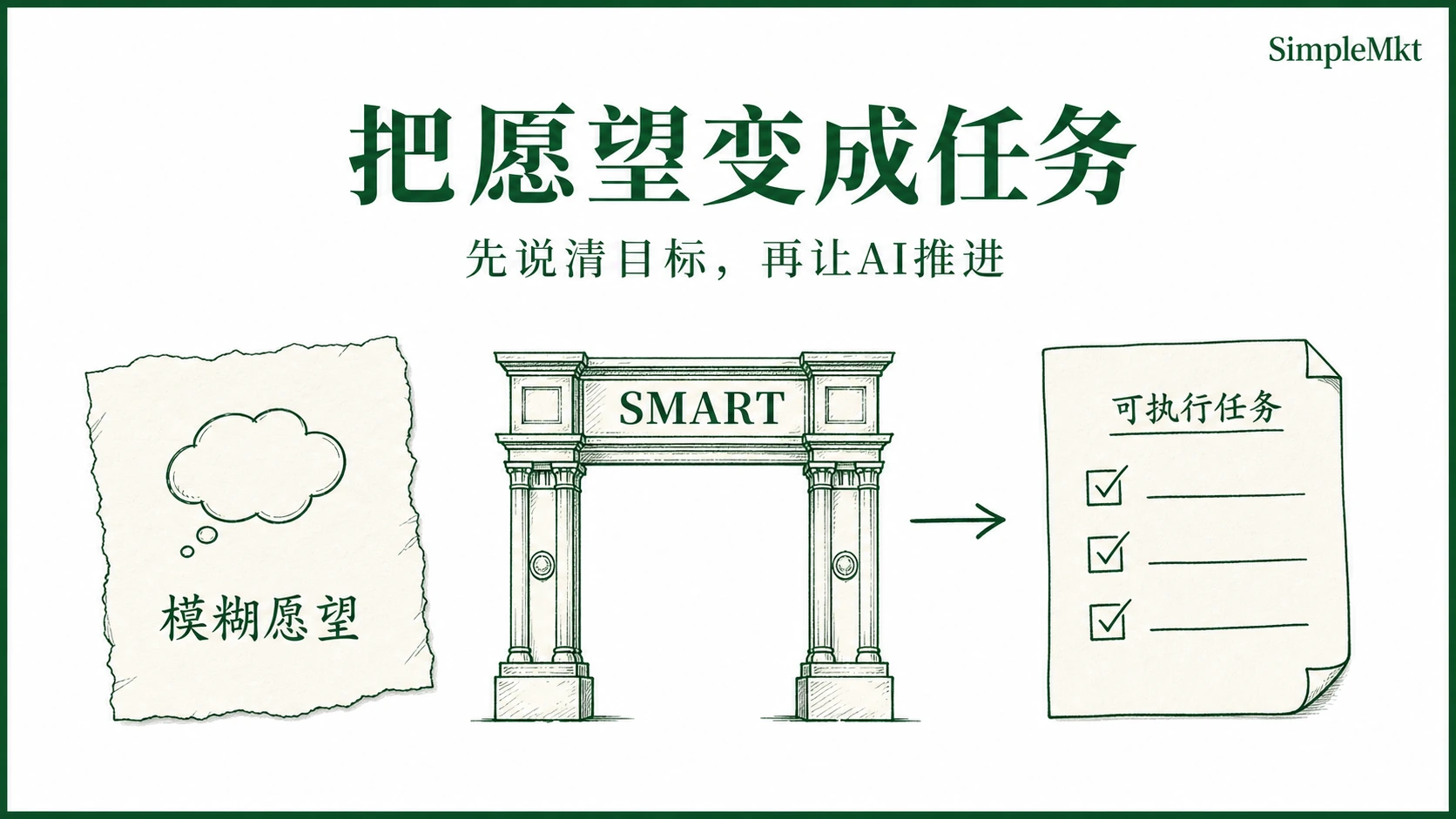
Use SMART Goals to Tell AI What You Need

Translated from the original Chinese article. Some illustrations are from the original and may contain Chinese text.
When AI goes off course, the problem is often not the model's ability. The goal may not have been described as a task that can actually be completed.
I first encountered SMART in marketing management. It helps turn a well-intentioned but hard-to-act-on ambition such as “improve brand influence” into a task with an audience, boundaries and a way to assess completion. The same principle applies when working with AI.
AI is not responsible for guessing my real intention. It helps advance a goal I have already made clear.
This applies beyond Agents: to ChatGPT, coding assistants, learning tools and travel planners. A person defines the goal first; AI then helps carry it out.
First, am I asking a question or assigning a task?
“Plan a trip.” “Help me learn English.” “Analyze this report.” “Make this feature work.”
None of these requests is wrong. But they do not say what matters most, what the deliverable should be, which conditions must be respected or what completion looks like.
Think of AI as a capable collaborator who does not know your situation. It fills gaps using limited information; the more it has to fill in, the greater the chance of missing your real intention. The answer is not simply a longer prompt. It is better goal-setting.
SMART offers five useful questions: Specific, Measurable, Achievable, Relevant and Time-bound. They are not a template you must fill in word for word.
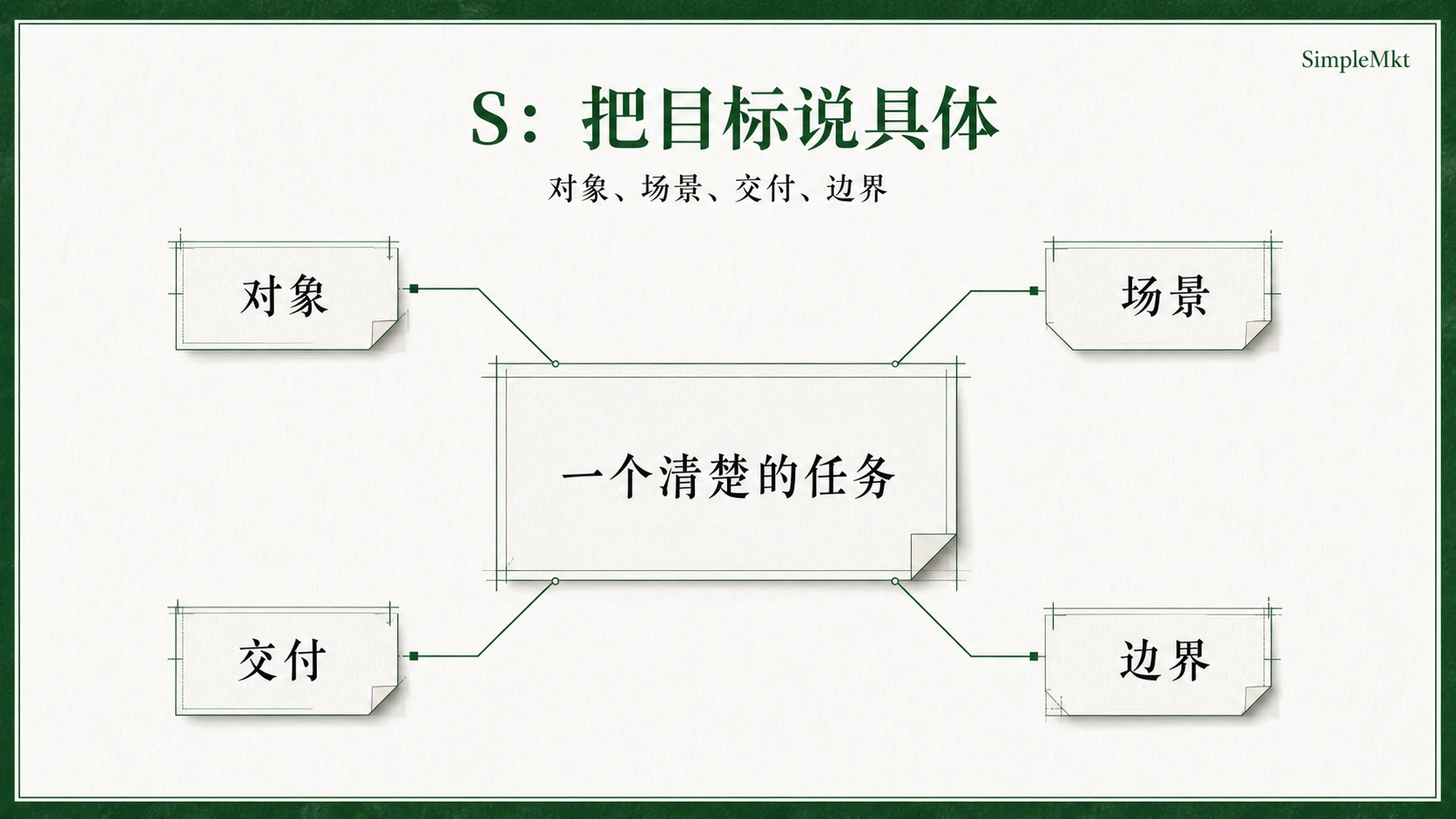
S: Make the request hard to misunderstand
Specific means clear. Explain the subject, situation, expected deliverable and what you do not want AI to do. For example, instead of “help me prepare for an interview”:
Next week I have an interview for a product manager role that emphasizes user research and cross-team collaboration. Based on my résumé, suggest ten likely follow-up questions and an answer structure for each. Do not invent projects I have not worked on; leave space for me to add the facts.
The situation, subject, deliverable and boundary are all there. The same approach works in daily life. Instead of “help me plan my weekend,” say:
I have four hours on Saturday afternoon and want a low-budget indoor activity with my two children, aged six and ten. Give me three options, each with the materials needed, total budget and an alternative for a rainy day.
Being specific does not mean controlling every AI action. It means not letting AI make choices that belong to me.
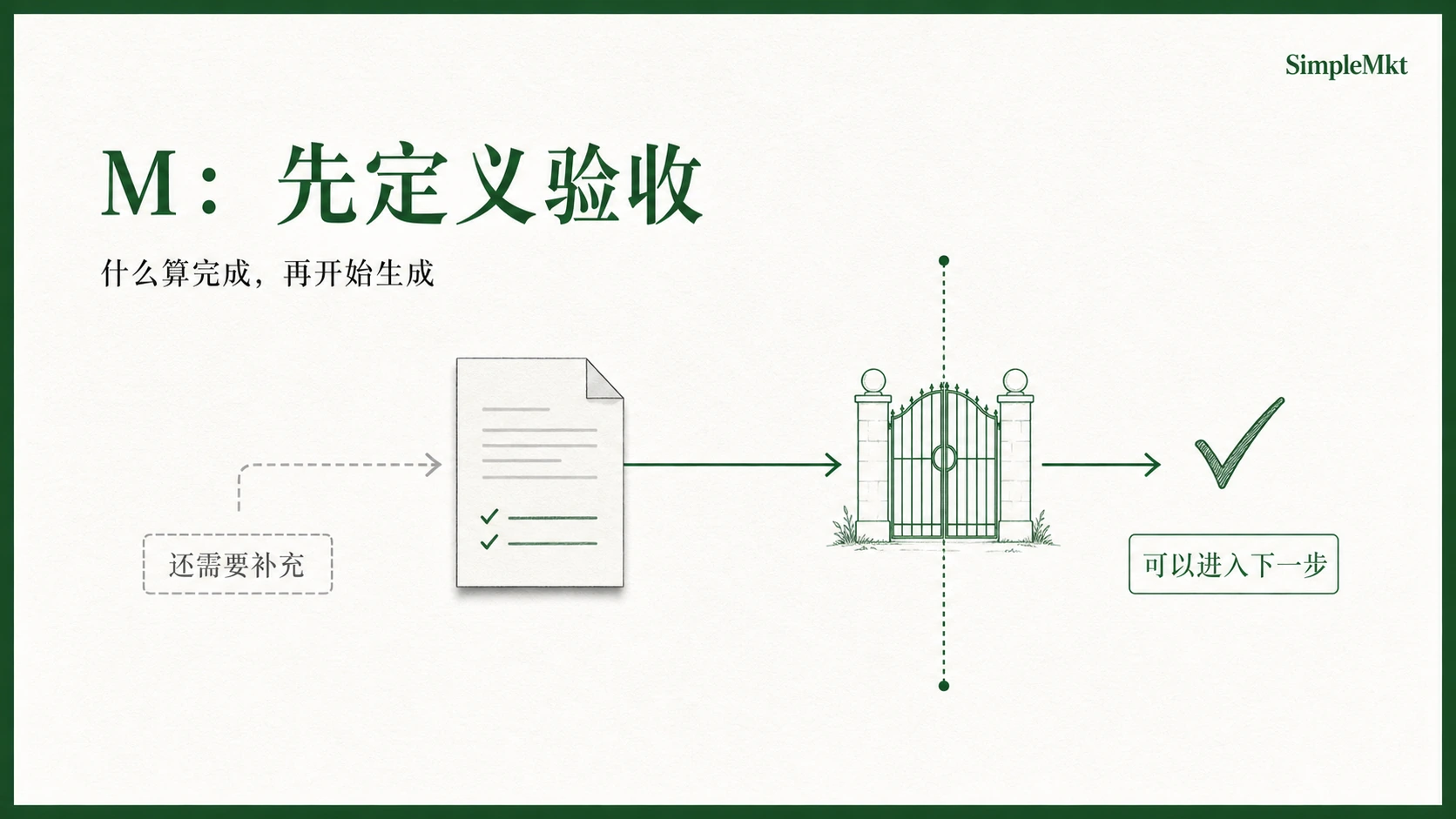
M: Define what counts as complete
Measurable does not always mean a KPI or a number. It asks: how will I know whether the output is ready for the next step?
For an industry report, the acceptance criteria might be:
- Explain three key findings in no more than 500 words.
- Cite the relevant page or source for each finding.
- Separate facts stated in the report from inferences.
- List three conclusions the report does not support.
The task is no longer just “summarize this.” It has become a deliverable that can be checked. Without completion criteria, AI may favor something that looks polished and comprehensive. With them, it knows what matters more than fluent wording or length.
I think of M as define acceptance before generating.
A: Make this round achievable
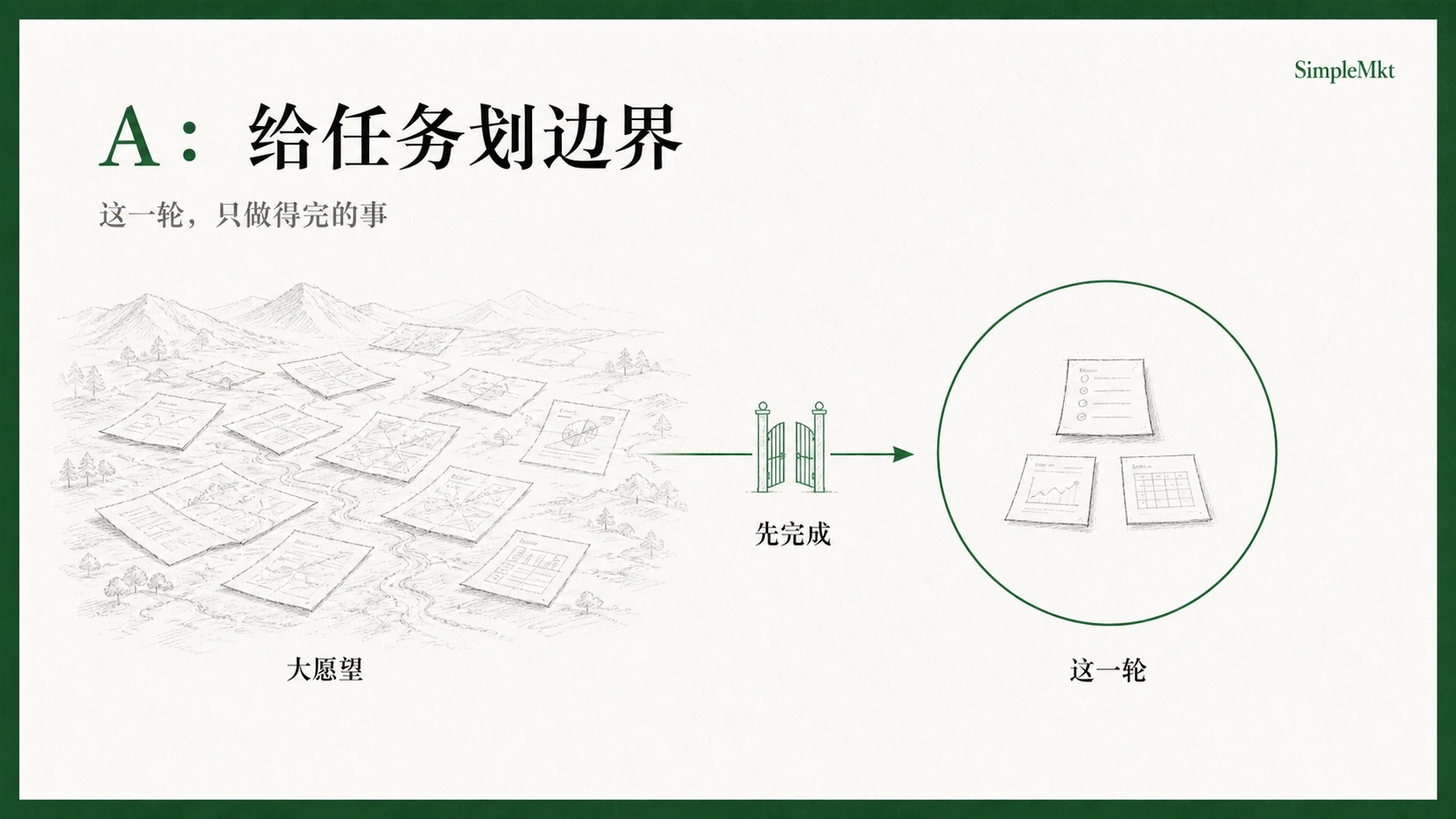
AI can make it tempting to believe that a large goal can be solved all at once: a business plan, a complete system rewrite or a three-year career plan. It can produce a long answer, but a long answer is not the same as a task you can advance.
Set a boundary for this round instead:
I am considering a move into data analysis. Based on my experience, identify skills I need to develop and propose a 30-day plan to test the direction. Cover an introductory project, learning resources and weekly review questions. Do not decide whether I should resign or assume I already have those skills.
This does not diminish the ambition. It puts uncertainty where it belongs: do not disguise missing information as a conclusion, or an unmade decision as a plan. AI can move quickly within a clear scope; outside it, a lot of output can masquerade as progress.
R: Connect the task to a real decision
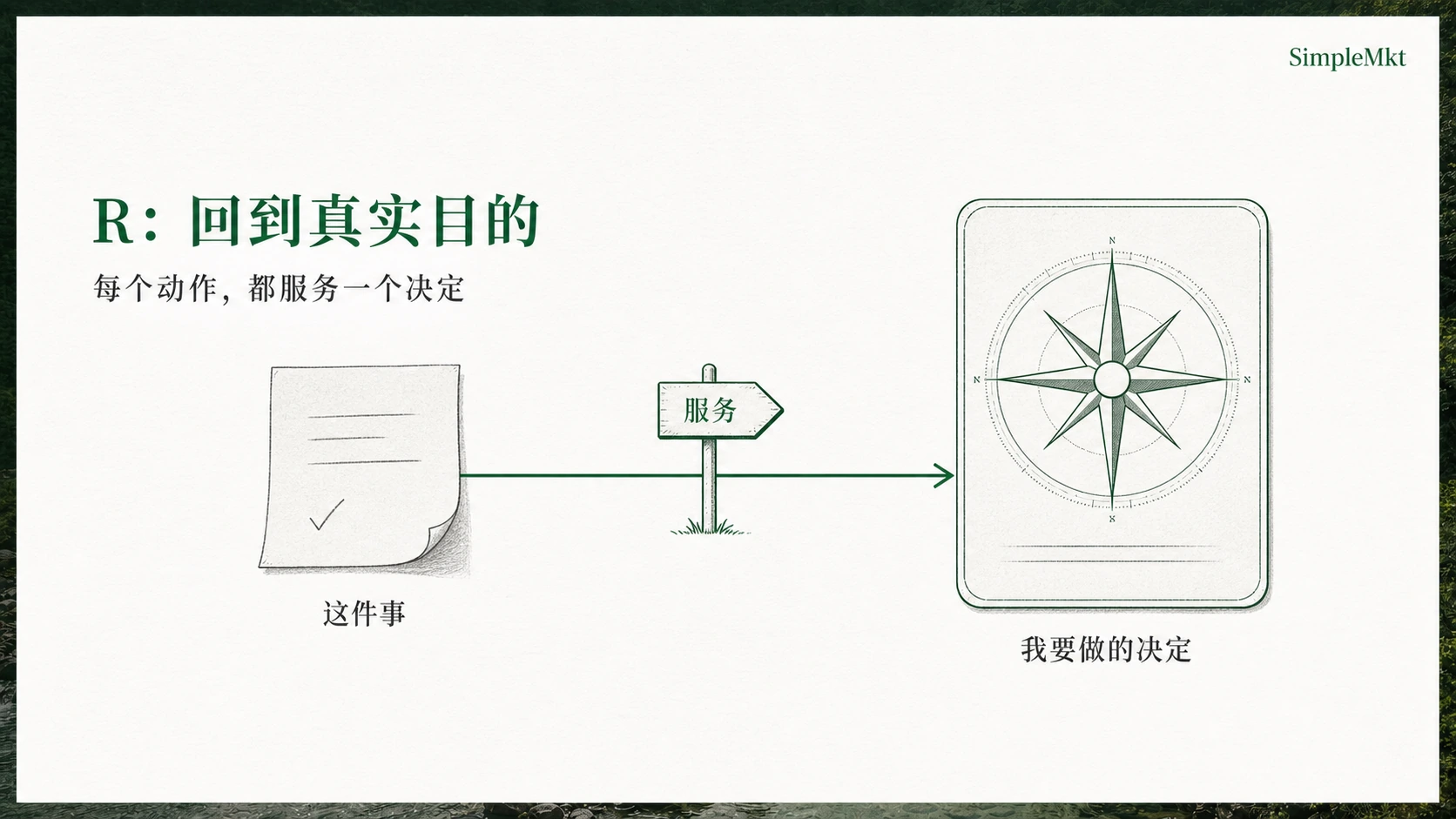
Relevant asks not merely whether an activity sounds valuable, but why it matters now and which decision it serves.
Instead of “summarize this contract,” ask:
Extract the terms that affect whether I should sign, grouped by cost, delivery, responsibilities and exit. I need questions for tomorrow's negotiation, not a general summary.
Similarly, instead of “help me learn Python,” say:
I want to use Python to automatically organize my weekly sales CSV. Design a learning path for this specific task, beginning with reading, cleaning and summarizing the data; do not give me a generic language-learning syllabus.
Connecting an output to the next decision changes what AI prioritizes. AI can summarize, compare, draft and check, but what matters most still comes from a person's situation, responsibility and choices.
T: Set an endpoint and a feedback point
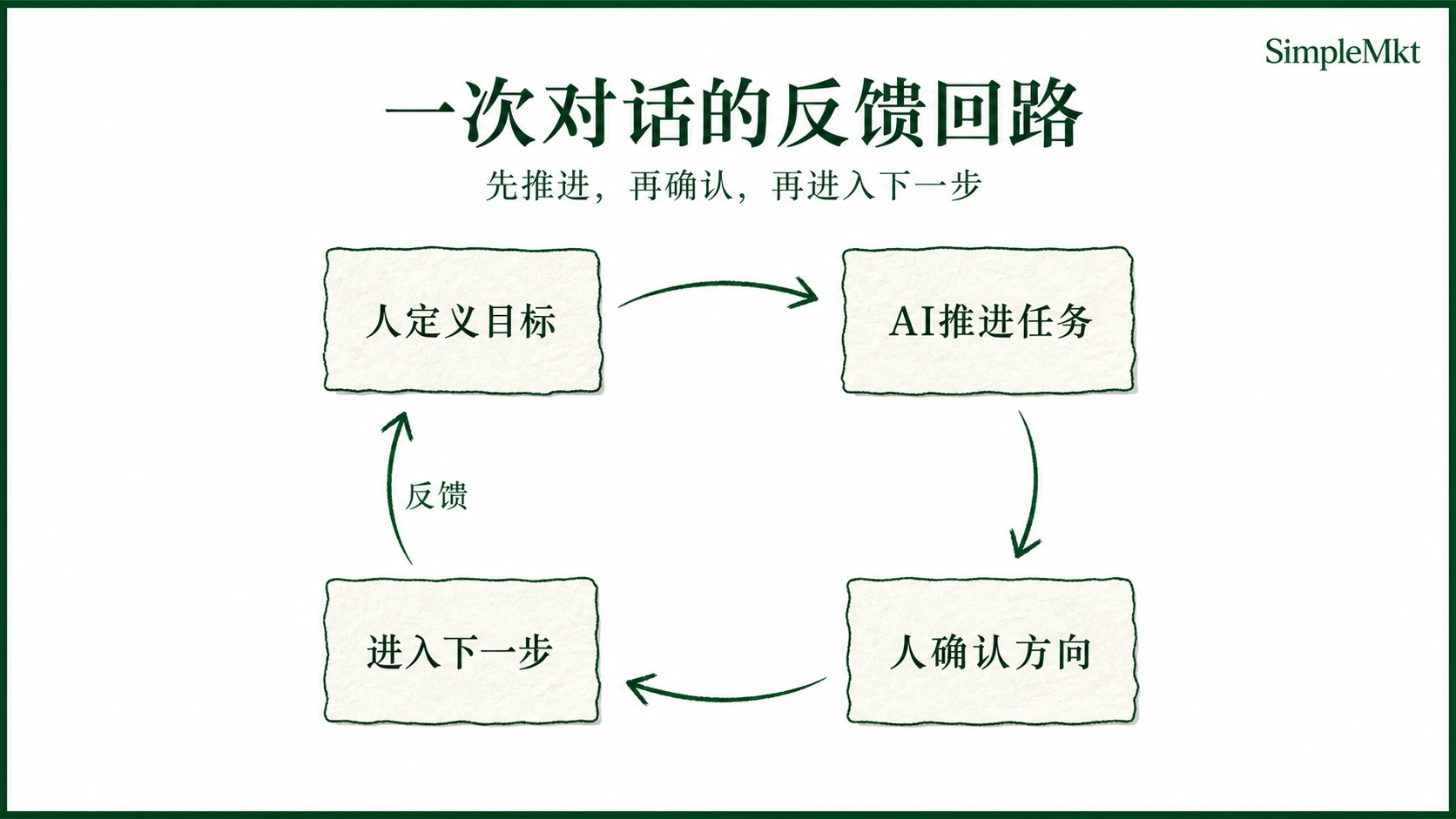
Time-bound means more than adding “by today.” It can define where this round stops, what I need to confirm and what happens next:
Within 20 minutes, propose three information architectures, each with no more than eight top-level sections. Once I choose a direction, expand the page content and fields. Today, stop after choosing the structure; do not start visual design.
This time box limits the current scope and places human judgment at the right point. I see T as a small feedback loop: what comes first, who evaluates it, and what follows the decision.
A goal card for any AI conversation
Before handing a task to AI, consider these lines:
Goal: What do I want to advance in this round?
Context: What is the situation, and whom does it serve or affect?
Deliverable: What concrete result do I need?
Acceptance: What conditions make it ready for the next step?
Boundaries: What facts must not be invented, and what limits must not be crossed?
Relevance: Which decision does this support?
Time: When does this round stop, and who confirms what?
Resources: What have I provided? Should missing information be requested, flagged or left for later?
It does not have to follow the five letters exactly. Deliverables, boundaries and resources often deserve their own lines. The point is to turn a slogan into a task that can be carried out, checked and reviewed.
Finally
Marketing taught me less about making goals sound polished than about saying clearly what I want to achieve. That matters even more with AI: it can advance a clear goal quickly, or amplify a vague one into a long, professional-looking answer.
Before opening the next chat, I ask: what do I want AI to help complete? What counts as complete? Which decisions remain mine? The clearer those answers are, the more likely collaboration is to begin.