AI Can Organize Your Content, but It Cannot Choose Your Long-Term Story
Translated from the original Chinese article. Some illustrations are from the original and may contain Chinese text.
Have you published a lot but found that people still cannot say what you consistently talk about? A recognizable brand or creator often has a clear narrative running through their work.
Since I started creating content, I have published roughly 20–30 pieces across platforms. Recently, while organizing them into collections and columns, I realized I might have the same problem.
I care about how AI can support brands and marketing, so I asked: could AI use what I had already made to help me find a narrative? I tried it.
AI gave me categories, not a narrative
I use a local AI-native workspace built around my own process to manage internal and public articles, drafts, their images and traffic returning from different platforms. I use it to create content with AI, make visuals, distribute work and track the response.
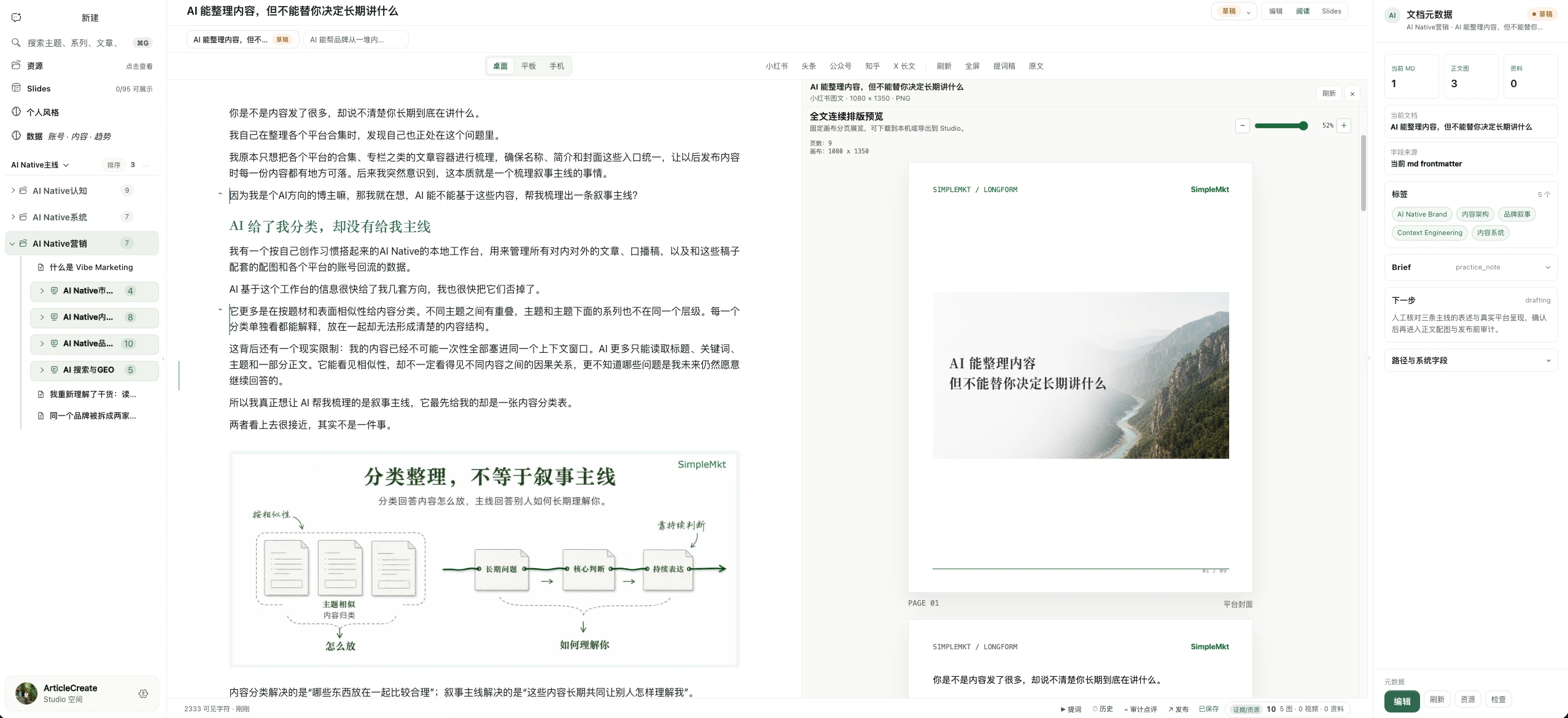
AI therefore had access to a relatively complete record of my production process. I asked it to identify a narrative across the content in the workspace. It quickly proposed several directions, but I was unhappy with them and rejected them.
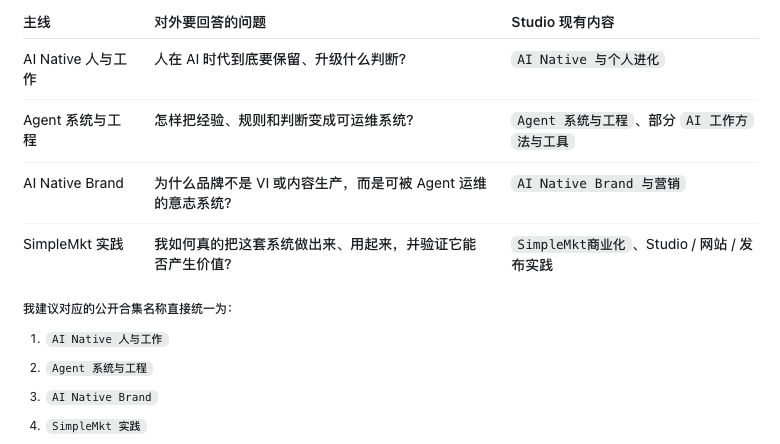
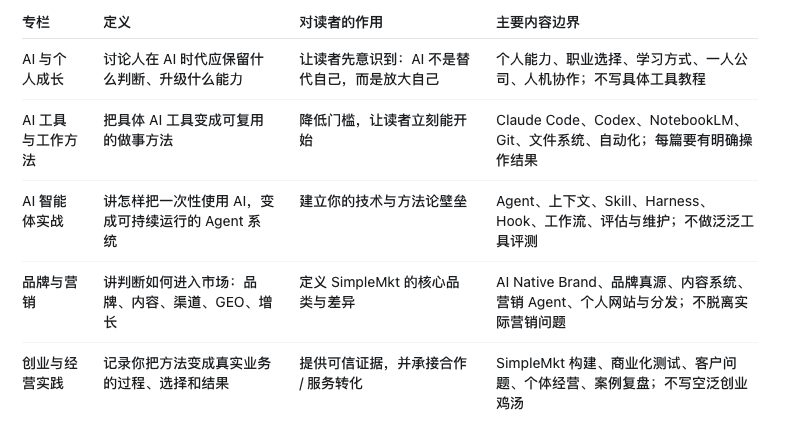
The suggestions grouped content mostly by subject and surface similarity. The groups overlapped, did not form a clear structure together and were too numerous.
I saw two underlying reasons:
- I could no longer fit everything into one context window. In the setup I used—Codex with GPT-5.6 and a 256K context window—the AI could mainly inspect titles, keywords, themes and parts of the text. It analyzed similarity from that limited view, and the causal relationships between pieces were harder for it to see.
- AI did not have all the context behind my judgments: my past experience, how I see things, how I judge similarity and causality, where I draw boundaries between topics, or my view of business.
Even with my produced content, it could give me an ordinary classification rather than my narrative. These sound similar, but answer different questions: classification asks “what belongs together?” Narrative asks “what do these pieces, over time, lead people to understand about me?”
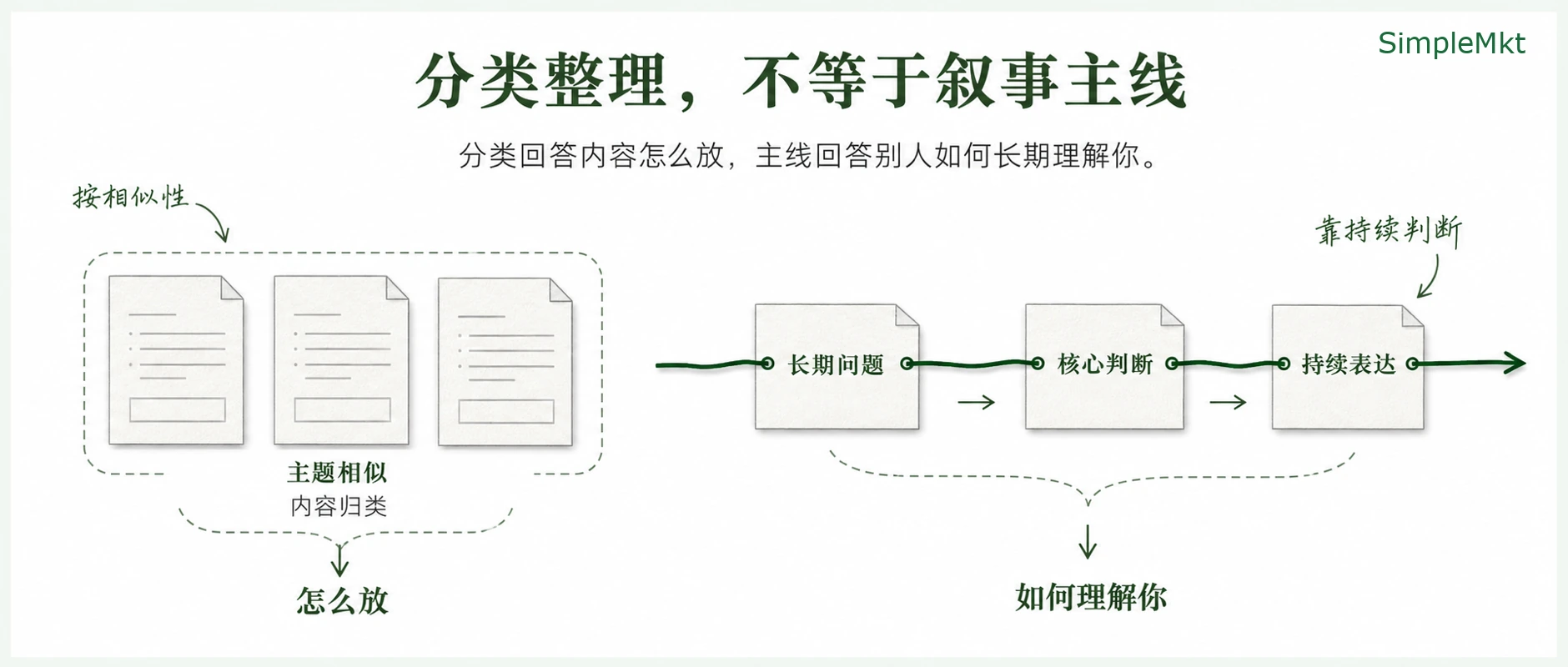
Give AI the judgments and constraints, then ask for a plan
Instead of repeatedly asking AI to organize a collection, I returned to the information it actually needed.
Step one: return to the question I want to pursue
My long-term interest is how to build an AI Native Brand: how human judgment can be retained, and how Agents can enter the everyday work of brand, content and marketing. That direction helps decide what belongs in the narrative and what, even if interesting or popular, should not become its center.
This interest comes from my experience and a belief I am still refining: marketing should be simple—find needs, create value and communicate value. Human organizations, ideologies and interests make those activities complicated. AI has led me to think that Agents may take on some of that complexity, allowing marketing to become simpler and more focused on value.
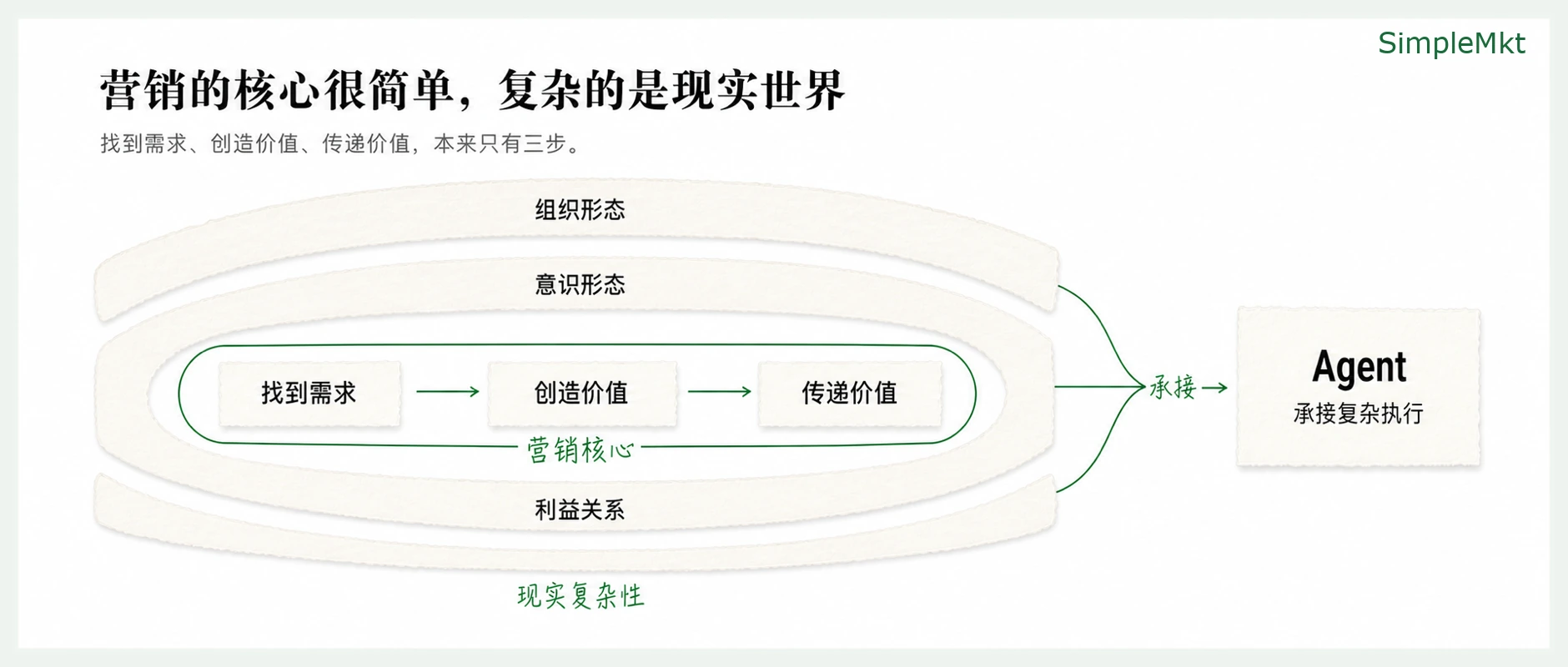
Step two: define the actual task
I did not need AI to divide everything into the finest possible categories. I wanted a narrative that could appear as collections and columns on my platform profiles, so visitors could quickly understand what I intend to talk about over time and how the topics fit together.
My internal workspace can hold themes, series and individual articles or scripts. A profile page, however, has room for only a few clear top-level entries. If I copied every series out unchanged, visitors would see a collection of hard-to-distinguish lists.
The second constraint was therefore clear: keep internal complexity inside; make public entry points few and stable, organized around the largest themes.
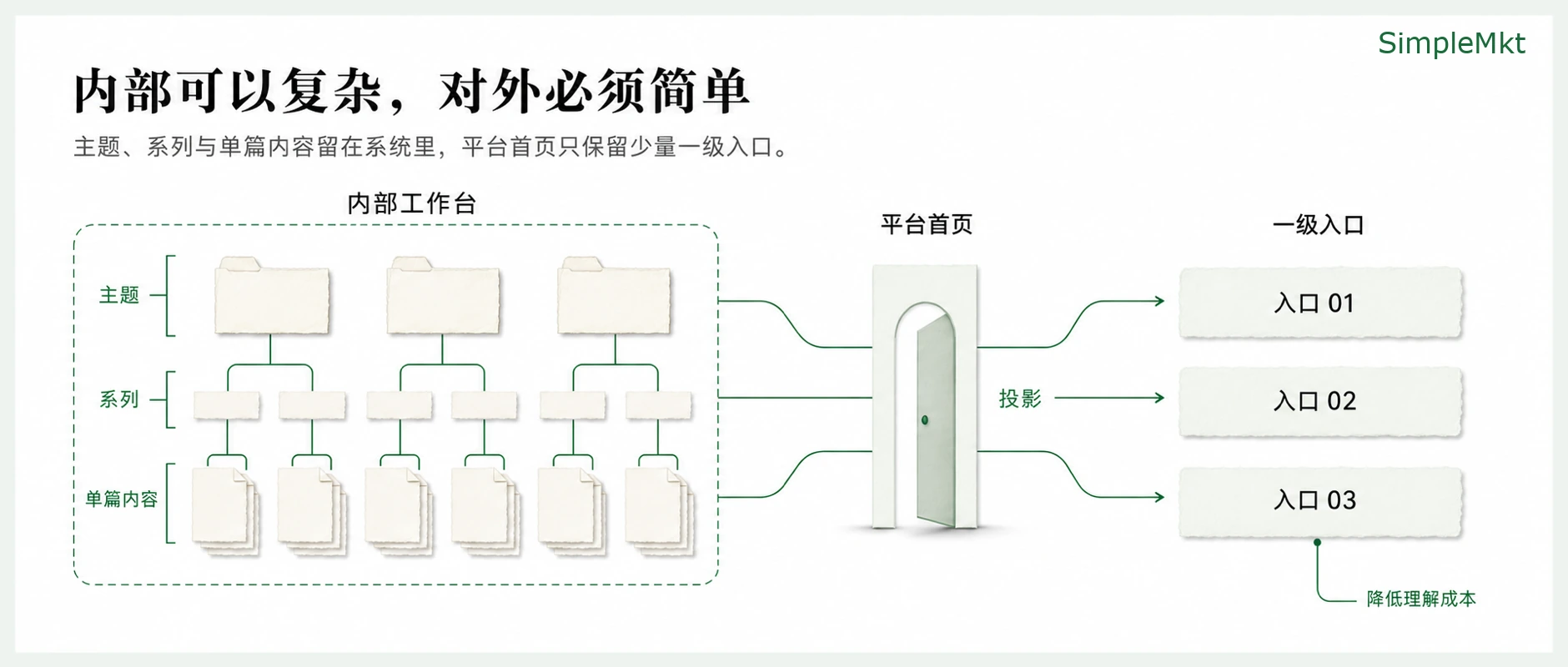
Step three: ask for candidates and use judgment to narrow them
AI now had three kinds of context: the long-term direction and emerging brand idea I could articulate, the practical limit on top-level profile entries, and the content and metadata already in the workspace.
I asked it for a plan—not because I expected a correct answer in one pass, but to see how it understood the content, hierarchy and boundaries.
Its new plan offered six parallel directions: AI-native understanding, ways of working, systems, brand marketing, market marketing and content marketing. Two issues remained. First, the dimensions were mixed: understanding, working practices and systems looked like levels of capability, while the three marketing topics were branches of one field. Second, six public collections still felt too scattered.
The plan was cleaner and closer to what I wanted, though. I did not start over; I gave AI those two judgments. It quickly returned the version I was looking for at that moment: three long-term directions.
- AI Native thinking: changes in understanding, thinking, human–AI relationships and capabilities.
- AI Native systems: AI tools, ways of working, Agents, Skills and production systems, distinct from the marketing topic.
- AI Native marketing: how AI enters brand, market and content marketing, changing judgments and processes in real business.
These are not merely three categories side by side. They suggest a progression from understanding, to building systems, to applying them in business.
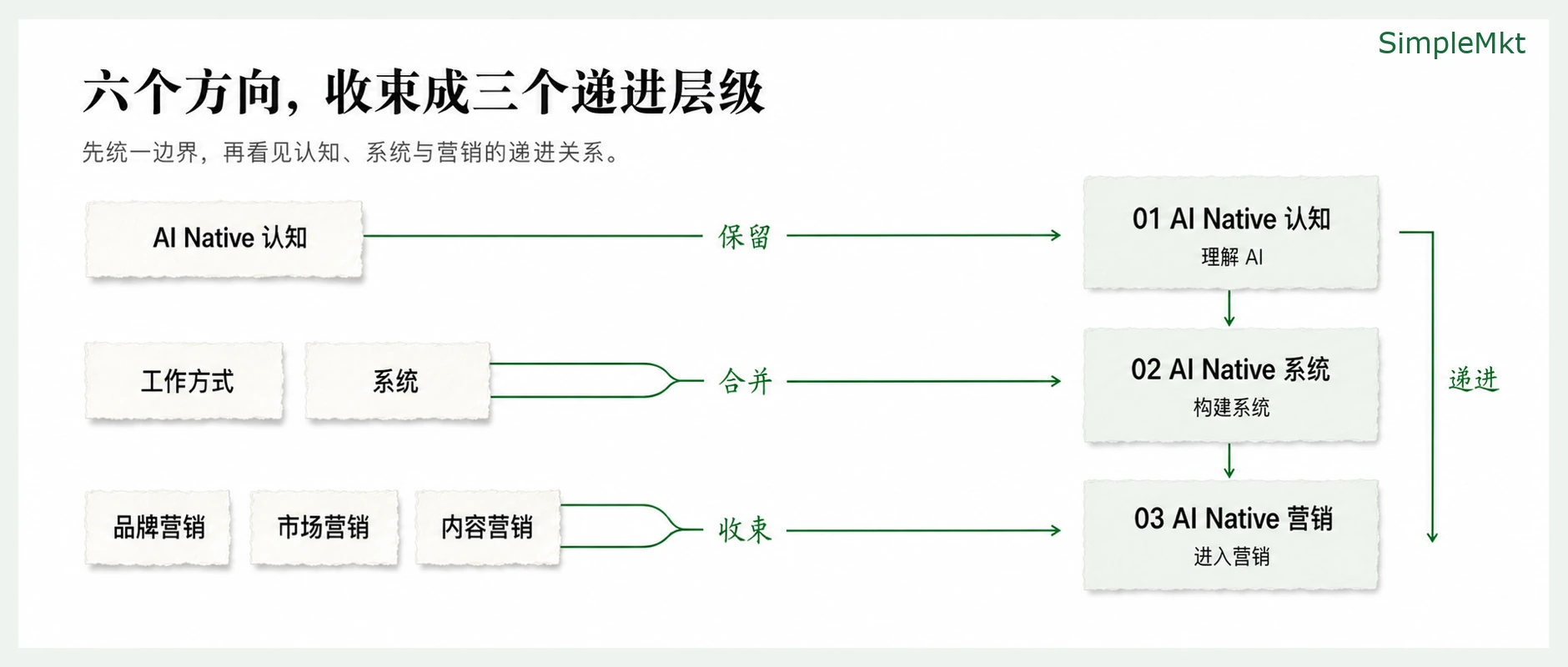
AI did not calculate these three directions automatically from all my articles, and I had not planned them in advance. I started with a vague sense, made some content, then asked AI to organize it with context and my own judgments. AI helped me converge more quickly; I still controlled the boundaries and core decisions.
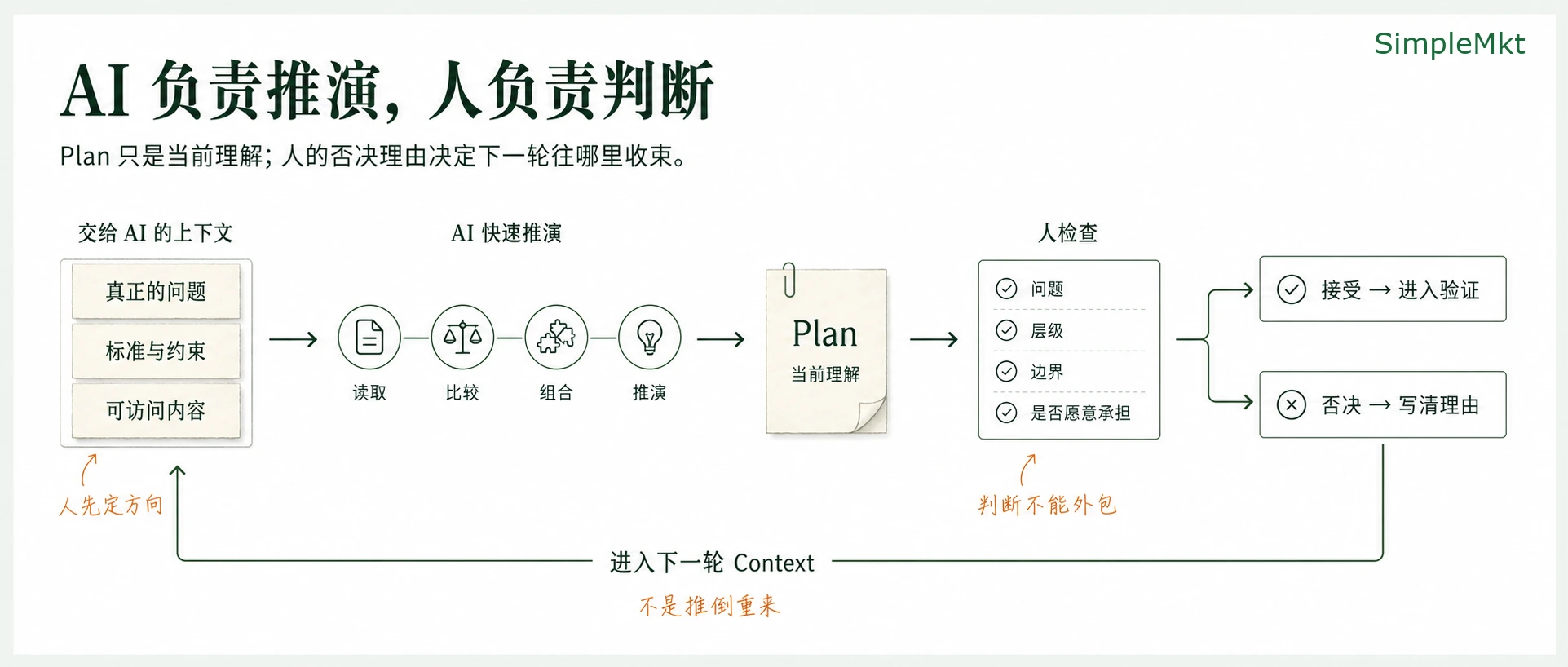
AI explores; people judge. A plan is a current understanding
AI can quickly expand and narrow options. Within the content it can access, it can identify recurring subjects and propose ways to organize them. Given a long-term direction, platform constraints and existing work, it can rearrange the hierarchy and incorporate reasons for rejecting an earlier plan. The speed of moving from loose categories to six directions and then to three came largely from AI.
But it cannot decide for me what is worth discussing for years. It does not inherently know which experiences shaped my judgment, which problem I am willing to keep working on, or why “thinking–systems–marketing” should be a progression rather than six parallel topics. Without those conditions, it can offer only a structure that seems plausible from what it sees.
The person's job is not to classify every article by hand. It is to define the real problem, provide judgments and constraints the AI cannot read from the content, check the hierarchy and boundaries of proposed plans, and take responsibility for the choice and its later validation.
AI reads, compares, combines and explores quickly; people define the problem, set standards, reject options and own the outcome. A plan is a checkable understanding of the problem in the current context, not the answer itself.
Context engineering is not simply stuffing more information into one window. It is making sure the conditions that affect a decision are available in the right order when they are needed. In this task, I first let AI read the existing content and saw ordinary categories. I then supplied the long-term direction and platform constraints; it proposed six directions. Finally, I explained the mixed dimensions and excessive public entry points, and we arrived at three.
Each rejection added context for the next decision rather than sending AI back to the beginning. I think that is an essential part of using an Agent.
Three directions are a current answer that still needs testing
You will now see these three directions on platforms where I can create collections. They are not permanent. They are the structure that best fits my existing content and current direction today.
The real test comes from interaction: after seeing these collections and reading the content across platforms, can people explain the questions I keep returning to? If they can, that is the outcome I hope for. If not, I can keep adjusting.
I continued the process as a Skill
The work did not end there. I asked AI to research methods for analyzing narrative, then used this case to organize evidence across time, counterexample checks and human judgment into an account-brand narrative Skill.
For creators or brands who have published a lot but are unsure what they want to discuss over the long term, I invited members of my AI marketing community to participate. I would select some accounts and, using historical content they authorized and made accessible, help explore a brand theme, narrative and three to five topics with AI.
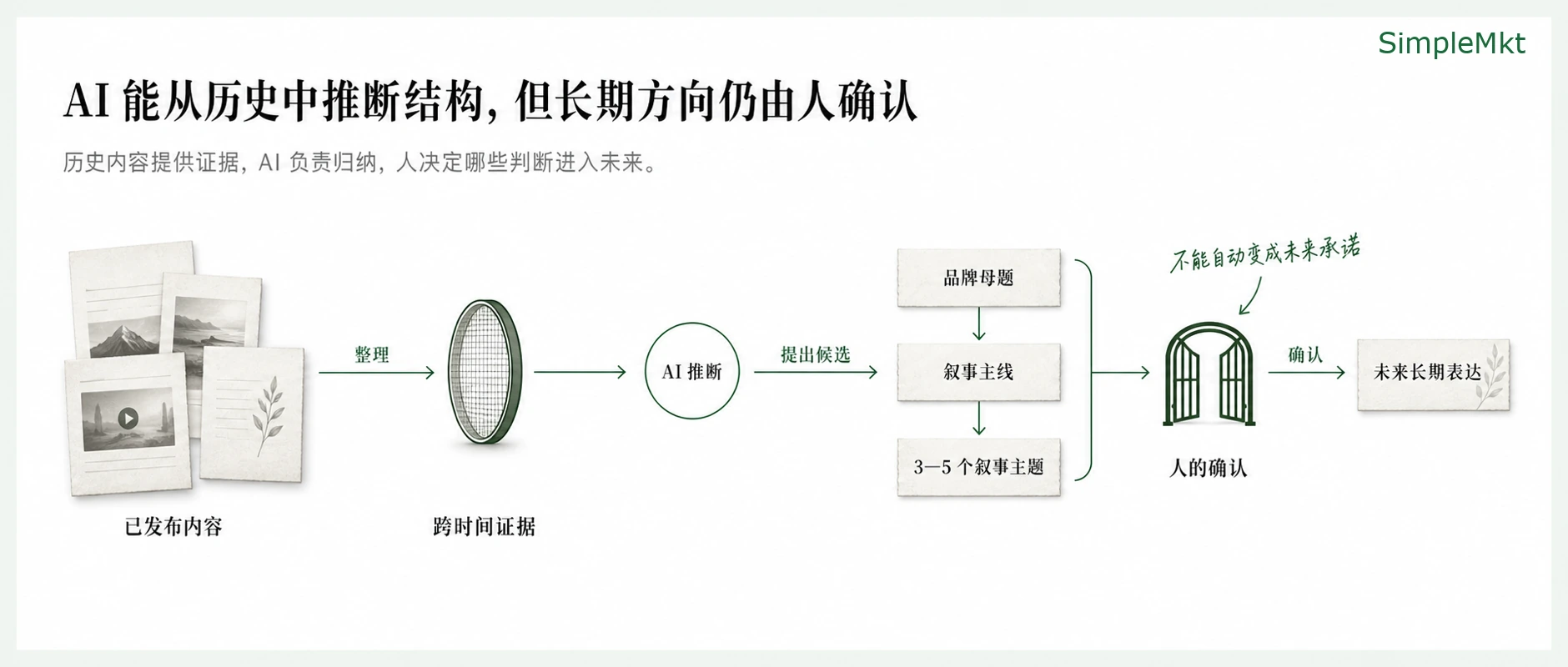
These results are inferences from past content. AI can help make the past clearer, but it cannot decide your future for you.
The communities
I also created two ongoing communities around this narrative, visible on Xiaohongshu and Douyin:
- AI thinking and practice: for people interested in AI and Agents to discuss understanding, use and real work.
- AI marketing practice: for brand, marketing, content and business practitioners exploring how AI Agents affect marketing. The account narrative exercise will be tested mainly in this group.

Anyone interested is welcome to choose the group that fits them.