
A Few Thoughts on Brands and IP
Translated from the original Chinese article. Some illustrations are from the original and may contain Chinese text.
Today I want to talk about IP—not an internet address, but the kind embodied by a character like Nezha. In branding and marketing, the idea can mean much more.
What is IP? A kind of emotional currency
The original meaning: IP is short for intellectual property. It protects intellectual creations such as novels, films and patents. The copyrights to Jin Yong's novels are an example.
A broader meaning: Today, people also use IP to describe a story such as Journey to the West, a character such as Mickey Mouse, a person such as Lei Jun, or even an idea. What matters is whether it can move beyond a single platform and find expression in different fields. Disney's Frozen, for example, extends beyond film to merchandise such as princess dresses that sell for hundreds of millions of dollars. I think of this kind of emotionally resonant, appealing carrier as IP too.

Why talk about IP?
I began thinking seriously about this while preparing a sports marketing proposal with colleagues. Researching the ecosystems around events such as the Olympics and the World Cup, and around charismatic sports stars, gave us a lot to think about.
In a marketing environment focused on quick traffic and one-off purchases, strong IP can have value across borders and media. It can communicate a brand's ideas and values, helping people develop a deeper connection with it.
It can reach different communities and, in some cases, remain influential across economic cycles. The NBA is one example of an IP that is also a brand. I see brands developing their own IP as a significant trend: selling a physical product alone is not enough; a brand also needs to stand for something.
How I understand IP
I think a strong IP needs three elements:
A soul: a distinctive idea. It needs a memorable idea, emotion or value at its core. For example, the rebellious spirit of “my fate is mine to decide” is part of Nezha's appeal.

Recognition: emotional resonance. The idea cannot matter only to its creator. It has to resonate with a community or a wider audience. In my view, this recognition is also a precondition for commercializing it.

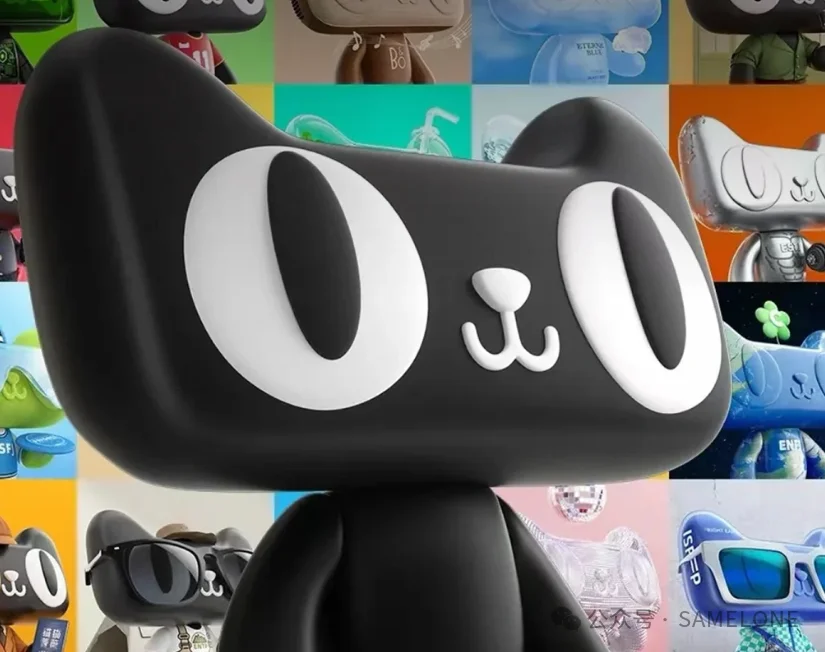
A form: something people can recognize and share. An idea needs a tangible expression: a character, a story, a person or a symbol. Michael Jordan's dunk silhouette and Tmall's black cat are examples of such recognizable forms.
The reach of an IP depends on all three: the breadth of its idea, how many people connect with it, and how far its form can travel.
When these elements come together, an IP can grow beyond a trademark or image into a creative ecosystem. It can give brands and audiences a continuing source of inspiration—for example, by inviting fan creations—and become a long-lived digital asset. Disney's catalog is one example of ideas continuing to find new life over decades.
How can a brand develop IP?
I understand brands and IP in a similar way: both can carry an idea rooted in the human spirit, even though they may take different commercial paths.
A brand can earn recognition and sell physical products. IP can earn recognition through an idea or story and be expressed through intangible experiences or physical derivatives. From this perspective, building brand IP and building a brand are two forms of the same question, and their convergence follows naturally.
- Look inward for the brand's soul. Clarify its vision and mission, then identify a meaningful idea or value within its core proposition. It should be sincere and ideally connect with a broader social emotion or cultural movement.
- Test whether the idea resonates. Use research and small-scale tests to see whether the intended audience recognizes and values it.
- Find a form for the idea. Give the validated idea a vivid, recognizable expression. A brand might create a character from scratch, like Mixue's Snow King, or collaborate with an established property, as in Anta's partnerships with the Palace Museum and Disney. The essential point is that the form should bring the brand's idea to life.