How to Become AI Native: From ‘AI Speechlessness’ to a Native Speaker
Translated from the original Chinese article. Some illustrations are from the original and may contain Chinese text.
“The future belongs to people who can collaborate seamlessly with AI. AI will not replace people; AI-native people will replace those who cannot use it.”
A harsh test
After I recently shared “Understanding AI Native Through Language Learning,” many friends asked: “I understand the idea, but how do I know whether I am AI Native now? How do I advance?”
There is a very simple, harsh test:
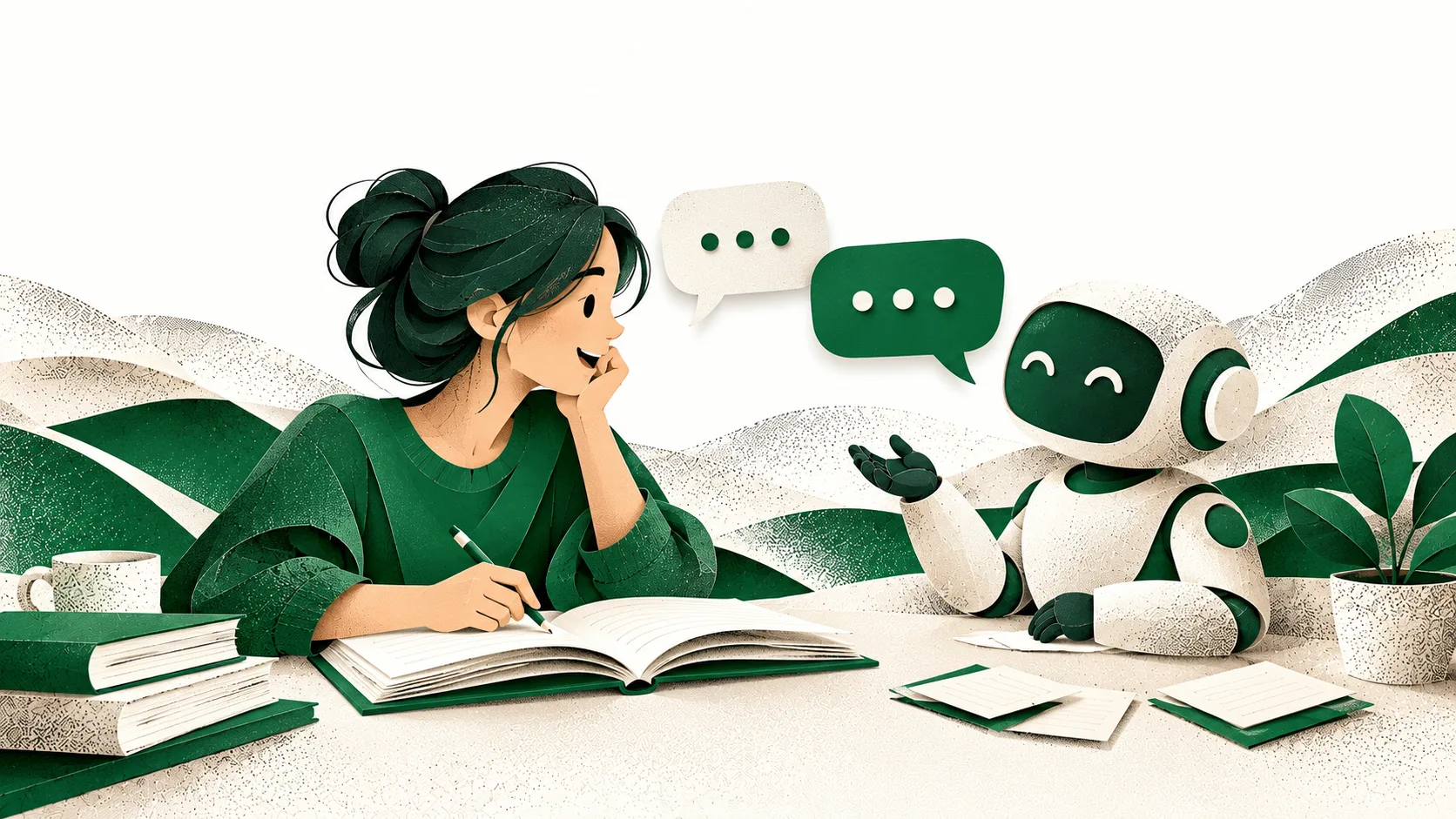
If all your AI tools—ChatGPT, Claude, DeepSeek and others—suddenly went offline today, would your productivity fall off a cliff?
- If you think, “It's fine; it's like Baidu going down, just a bit inconvenient,” you are not yet AI Native. It is like losing a dictionary.
- If you feel strong anxiety and discomfort, or even think ‘I can't do this work’, you probably already have some of the AI-native flavor.
Why? To a native speaker, language is not a tool but the medium of thought. If you were suddenly unable to think or express yourself in your mother tongue, you would be left speechless.
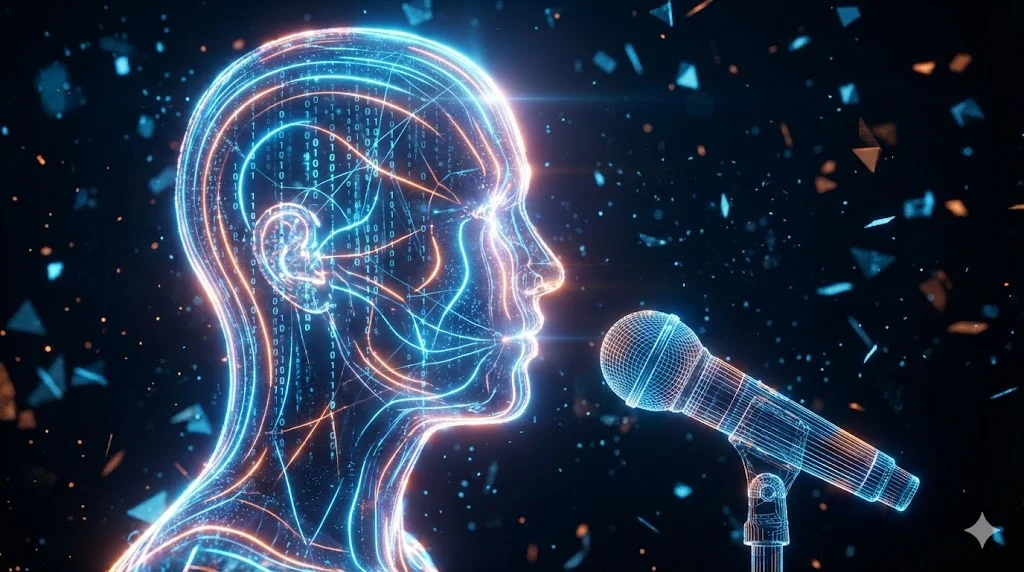
Most of us are still translating
One difficult stage in learning English is thinking in “Chinese-style English”:
- Think in Chinese.
- Translate it in your head into awkward English.
- Say it aloud.
- Hear the reply and translate it back into Chinese.
The loss in those translations is a source of inefficiency.
Many people use AI in much the same way:
- Encounter a problem, thinking in human language.
- Struggle to write a prompt, trying to translate it into something AI understands.
- Receive a lot of nonsense from AI.
- Manually rewrite it—translating it back into human language.
A truly AI-native person aims for zero translation loss.
How to advance: four key actions
How do we move from being “speechless with AI” to becoming a “native speaker”? I see four key actions.
Force immersion: create a language environment
One fast way to learn English is to move abroad and be forced to use it to get by. Becoming AI Native is similar: actively create an environment in which you have to use AI.
- Don't: first search Baidu or laboriously write everything yourself when a problem arises.
- Do: make opening an AI chat the first step for any document, any code and any plan.
Even if AI writes less well than you at first, make yourself work through the process. Like gesturing your way through conversations when you first move abroad, it can be tiring but helps develop a feel for the language.

Stop translating awkwardly: understand probability prediction
We often feel AI cannot understand ordinary language because we treat it as a person. But:
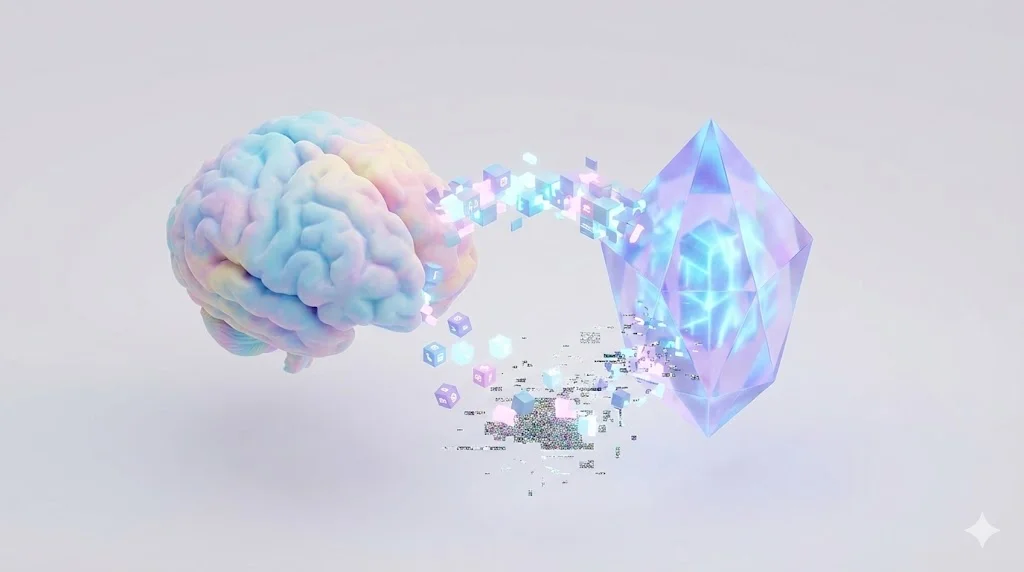
AI's native language is neither Chinese nor English; it is structured data and logic. Its core component, the LLM, can be described in one sentence: predict the next token.
This means AI does not “understand” your intent in the same way a person does. It calculates: given the preceding context, what is the most probable next token? As model parameters, algorithms and training data improve, it becomes increasingly capable of simulating a human-like understanding of intent.
If you provide confused spoken language—high-entropy information—the predicted continuation may be nonsense. With clear structured data—low-entropy information—it can predict the desired result more precisely.
- Beginner: sends a long colloquial passage and expects AI to guess what they mean.
- AI Native speaker: sends JSON, Markdown, code blocks or a clear
Role-Task-Contextstructure.
It is like laying tracks for AI with language. The clearer the structure—context engineering—the less likely the train is to go off course.

Understand cultural differences: know each model's character
Just as English-speaking countries include the United States, Britain and Australia, AI models have different “cultures” and “characters” because their training data and technical approaches differ. An AI-native person would not rely on one model for everything. My quick overview:
- All-rounders (ChatGPT, Doubao, Kimi): like emotionally intelligent stewards, capable across a range of tasks and strong in multimodal work; useful for general tasks and everyday conversation.
- Specialists (Claude, DeepSeek, Qwen): like gifted people with particular strengths. Claude and Qwen write good code; DeepSeek is strong in logical reasoning. I would choose them for technical tasks such as coding or mathematics.
- Resource-rich models (Gemini, Grok): like geeks with special resources. Gemini has a large context window; Grok has timely access to Twitter data.

I plan a separate detailed overview and evaluation of mainstream models including ChatGPT, Claude, Gemini, Grok, DeepSeek, Kimi, Doubao and Qwen. Follow or bookmark it if interested.
For me, being truly AI Native means choosing the most suitable probability distribution to help predict the next token. Claude/GPT for code, Perplexity/Grok for information, Kimi/Gemini for long texts: that should become muscle memory.
Build a human–AI collaboration memory library
Finally, a more advanced step: turn your experience into a library of muscle memory.
Don't start a prompt from scratch for every problem. As you collaborate with AI, keep accumulating your own Agents, Skills and Workflows. The “pragmatic trilogy” I shared earlier is one such library:
- Skill—the toolbox: make common actions atomic. Examples include “read a Feishu schedule,” “extract memorable lines from an article” and “turn code into an image.” Like a hammer, anyone can use these skills; they carry no emotional preference.
- Agent—the person responsible: assign a category of tasks to a dedicated role. A schedule-manager Agent thinks about time; a style-editor Agent turns dry text into my vibe. Formula: Agent = business owner + memory of rules + tools + SOP.
- Workflow—the SOP: turn frequent sequences into minimal instructions. If an Agent often calls the same three Skills, I package them as a workflow: Trigger (when) → Process (how) → Outcome (what result).
These are my accumulated memory library. Once it exists, I am no longer working alone. When a problem appears, my first reaction is no longer “How do I do this?” but “Which of my Agents should get this task, and which workflow should it use?”
That is an AI Native Workflow.

Finally
There is no shortcut to learning a language, and the same is true of becoming AI Native. It requires spending time with AI every day, frequently and deeply, feeling out its logic, adapting to its boundaries and building a working rapport.
In the future, the distinction will not be whether people can use AI, but whether they are AI Native.
Are you ready to begin your “language immersion abroad”?

Discussion: If AI stopped working today, how much would it affect your work? Tell me in the comments and test how much AI is in your routine.