What Does Using AI in Marketing Strategy Look Like?

Translated from the original Chinese article. Some illustrations are from the original and may contain Chinese text.
Why this topic?
What does AI use in marketing actually look like today?
I want to share, from the perspective of an agency strategist or planner, how I bring AI into everyday work. A common but relatively complete example—analyzing competitor creator-led product recommendations on Douyin—shows how AI helped me produce a strategy analysis.
The competitor-analysis scenario
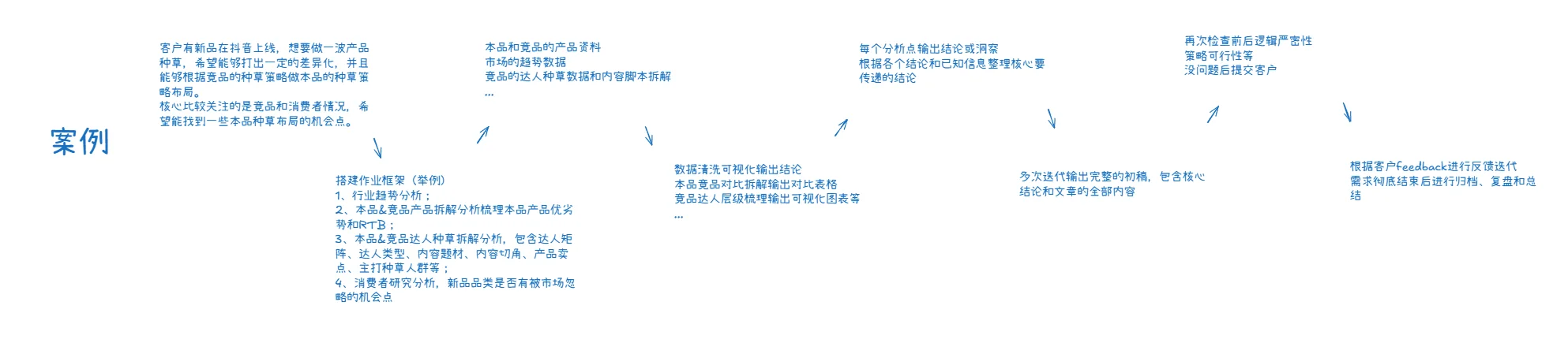
First, the whole work path in words:
- A client is launching a new product on Douyin and wants a wave of creator-led recommendations that stand out. They want to plan their strategy using competitor approaches, focusing on competitors and category consumers to find opportunities. They bring that information to your agency and ask for competitor analysis and strategic recommendations.
- You discuss the analysis purpose, key concerns and competitors with the client. Drawing on the request, your knowledge of the client and your experience, you plan the work: build a framework, determine the content, data and sources needed, and imagine the final presentation.
- You collect data and material, analyze and summarize, produce conclusions and insights, and repeat until they form a logical document or presentation with a story. You check and deliver the draft. The client may give feedback or request changes, so you repeat the process. Once no more revisions are needed, the request has moved from brief to delivery.
- If you are attentive, you also review the deliverable. I call this archiving: extract reusable methods or SOPs and identify improvements. Each assignment becomes an iterative growth loop.
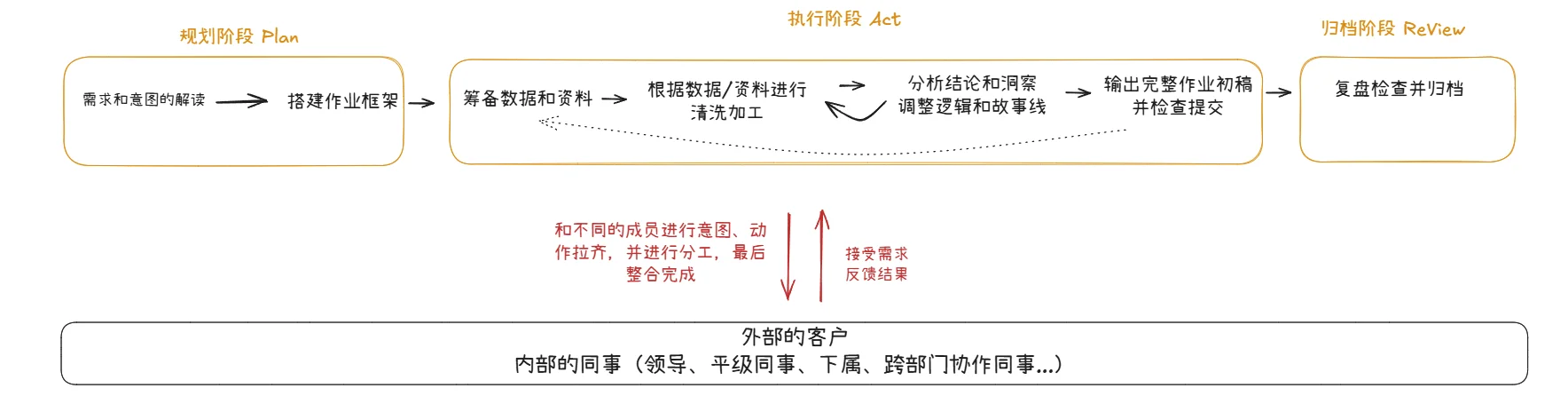
From a higher-level view, the process has three stages:
- Planning: interpret the intent and build a framework.
- Execution: prepare, clean and process material; derive insights; check before submission.
- Archiving: review, check and retain what can be reused.
If colleagues participate, one or more stages also involve aligning on the request and dividing execution.
How did I use AI to improve efficiency and quality? Here are examples from each stage.
Planning
Example one: build basic industry understanding and an analysis framework
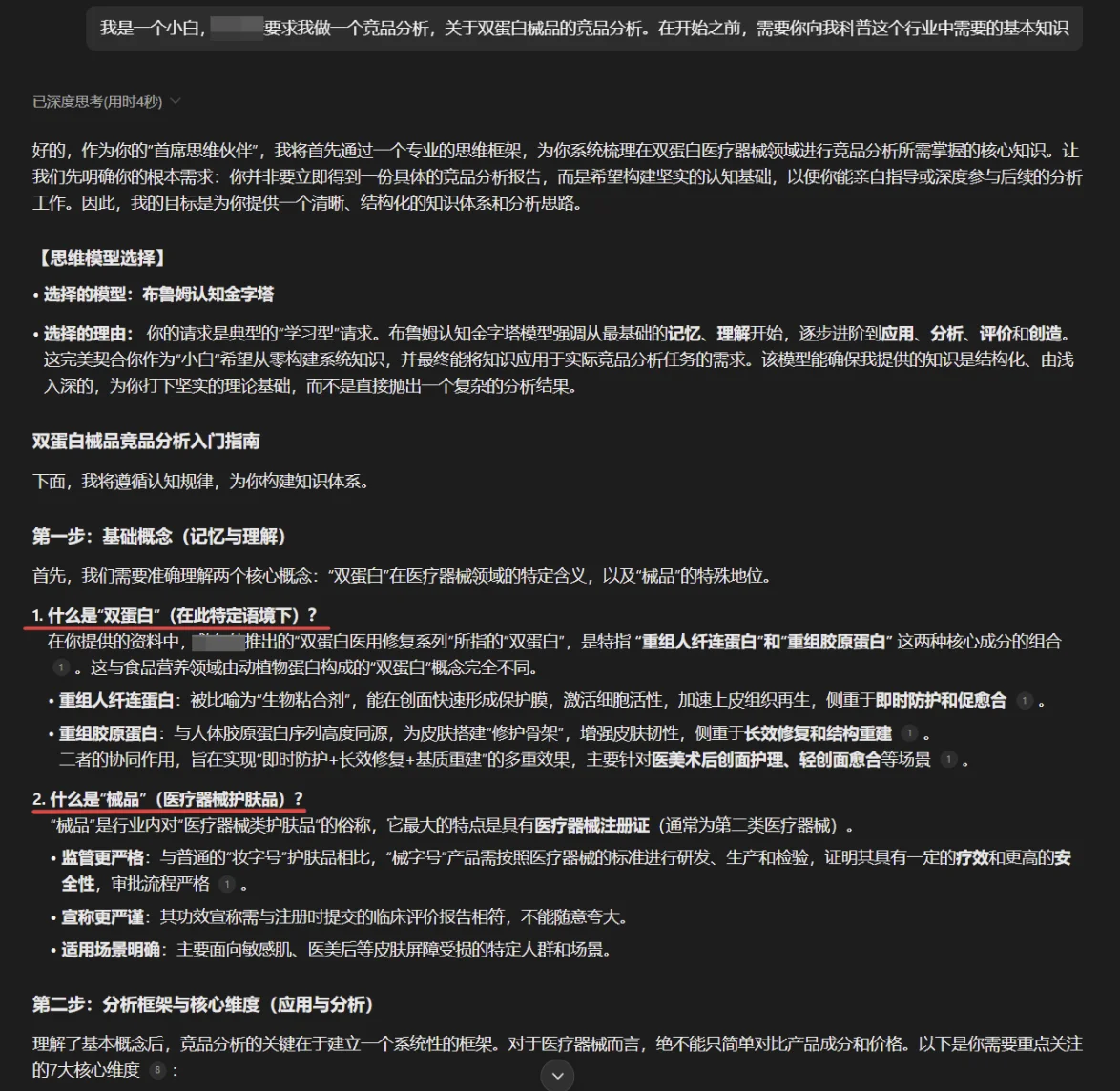
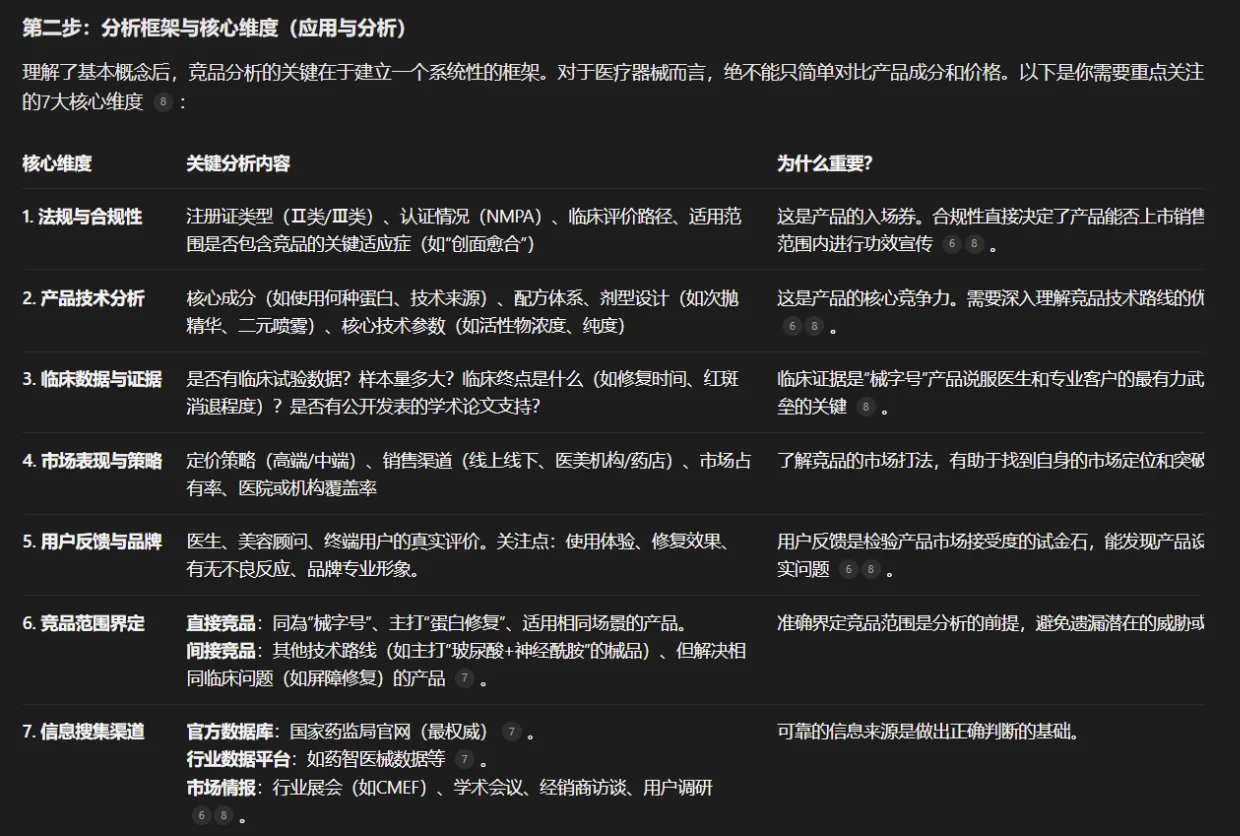
When I lack knowledge of a particular industry, I tell AI I am a beginner and that a brand has asked me for a competitor analysis. I ask it to explain the basics. It gives me background and framework suggestions, including the dimensions worth examining, helping me quickly understand an unfamiliar category or industry.
Example two: focus and extend the value of the assignment
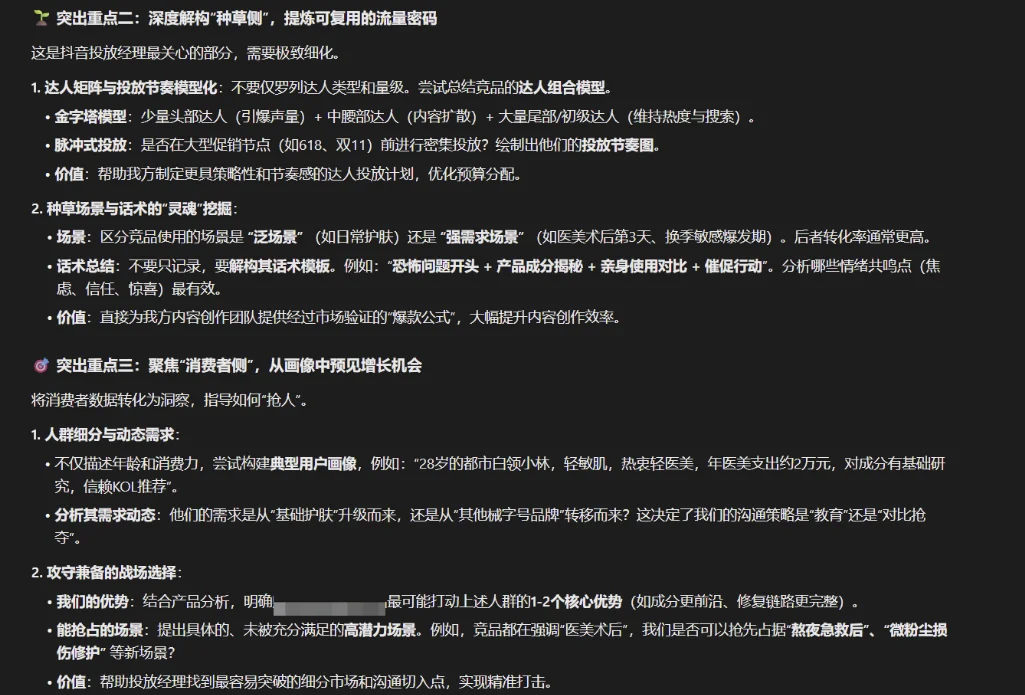
I describe the client's background and request, then ask AI to extend the value. It suggests concerns from different angles and ways to help the client better: not just list creators by type and size but summarize their combination model; not just describe age and spending power but build multidimensional personas; and not just examine competitors' main scenarios but look for under-served, high-potential ones.

Example three: quickly understand a brand's history
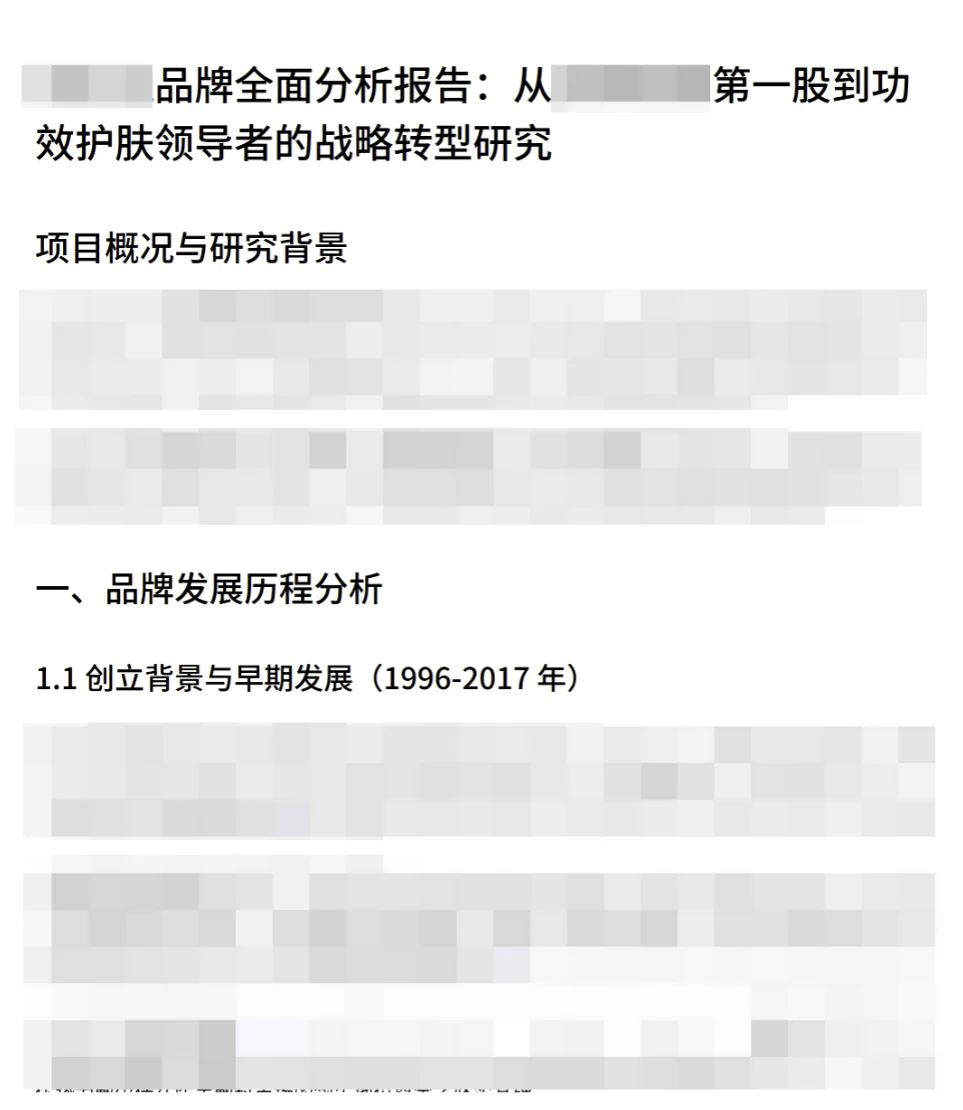
We may know nothing about a brand in a new assignment. To serve it well, we need a basic understanding. I prepared a structured brand-research prompt and used the Deep Research features available in major AI tools to investigate its background, founding, development, past marketing priorities, key categories and products, and possible pain points.
Execution
Example one: identify differentiated product advantages
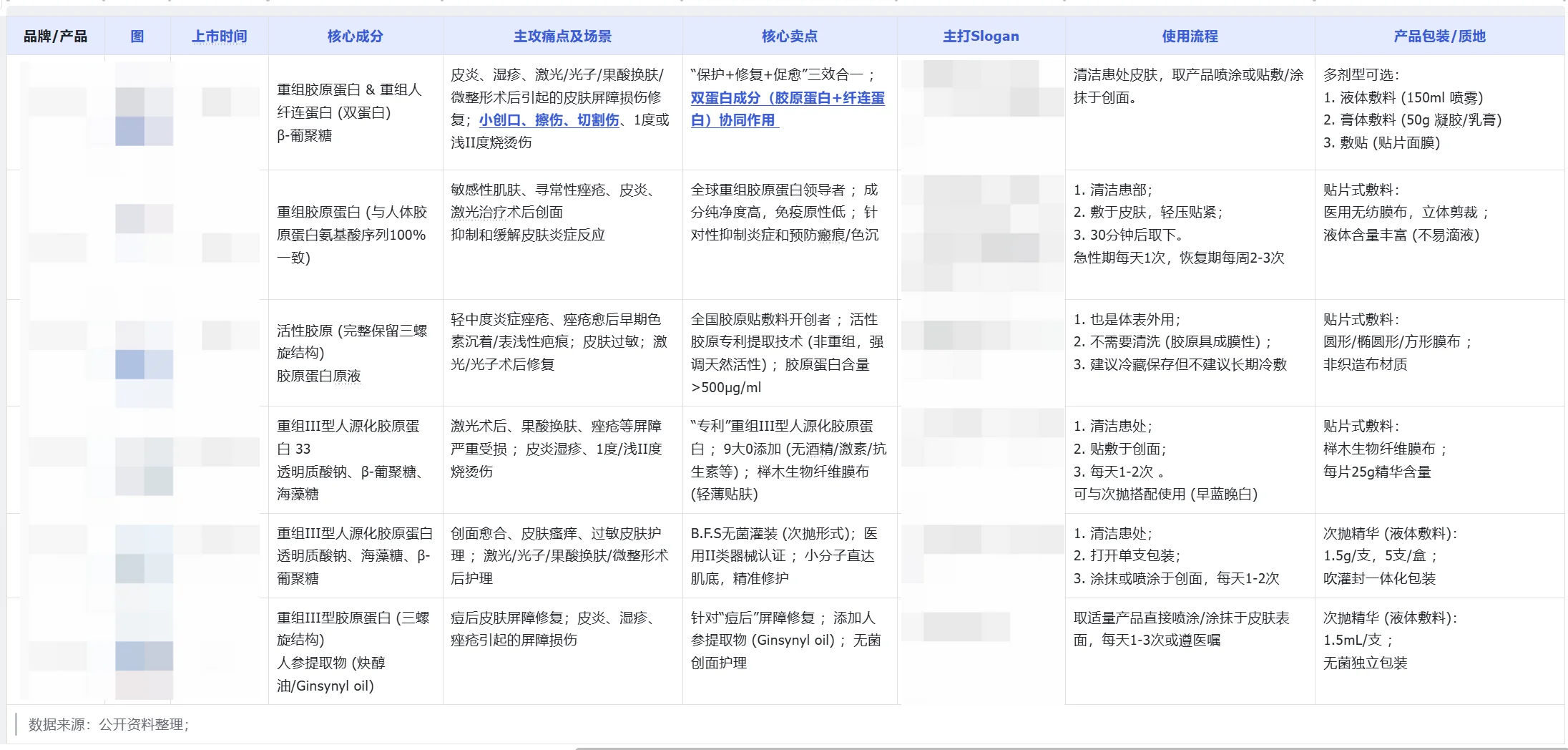
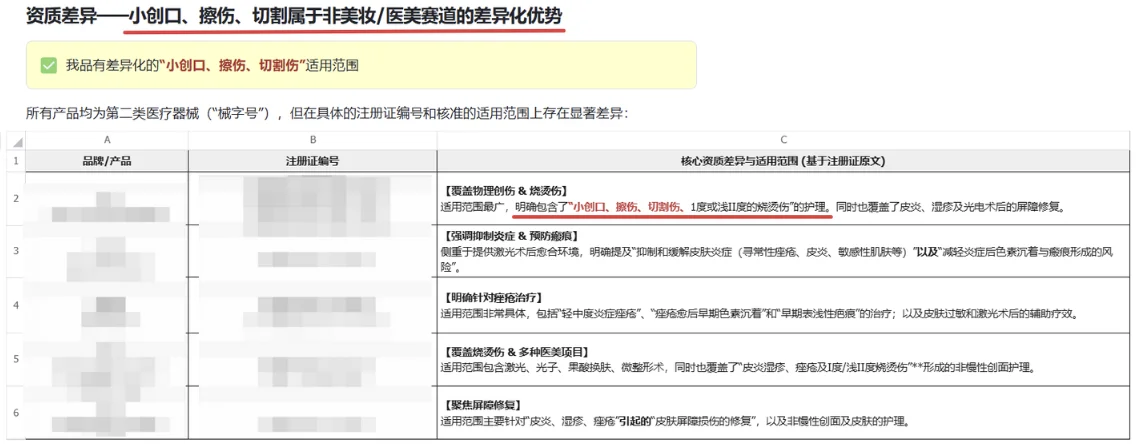
I gathered PDFs of competitor product-detail pages from public e-commerce sites and gave them to AI. Following the column headings I specified, it summarized product information and identified distinctive advantages—value that one product had and others did not. It produced the table in minutes, including differences in qualifications, which I manually checked.

Example two: analyze data and derive insights
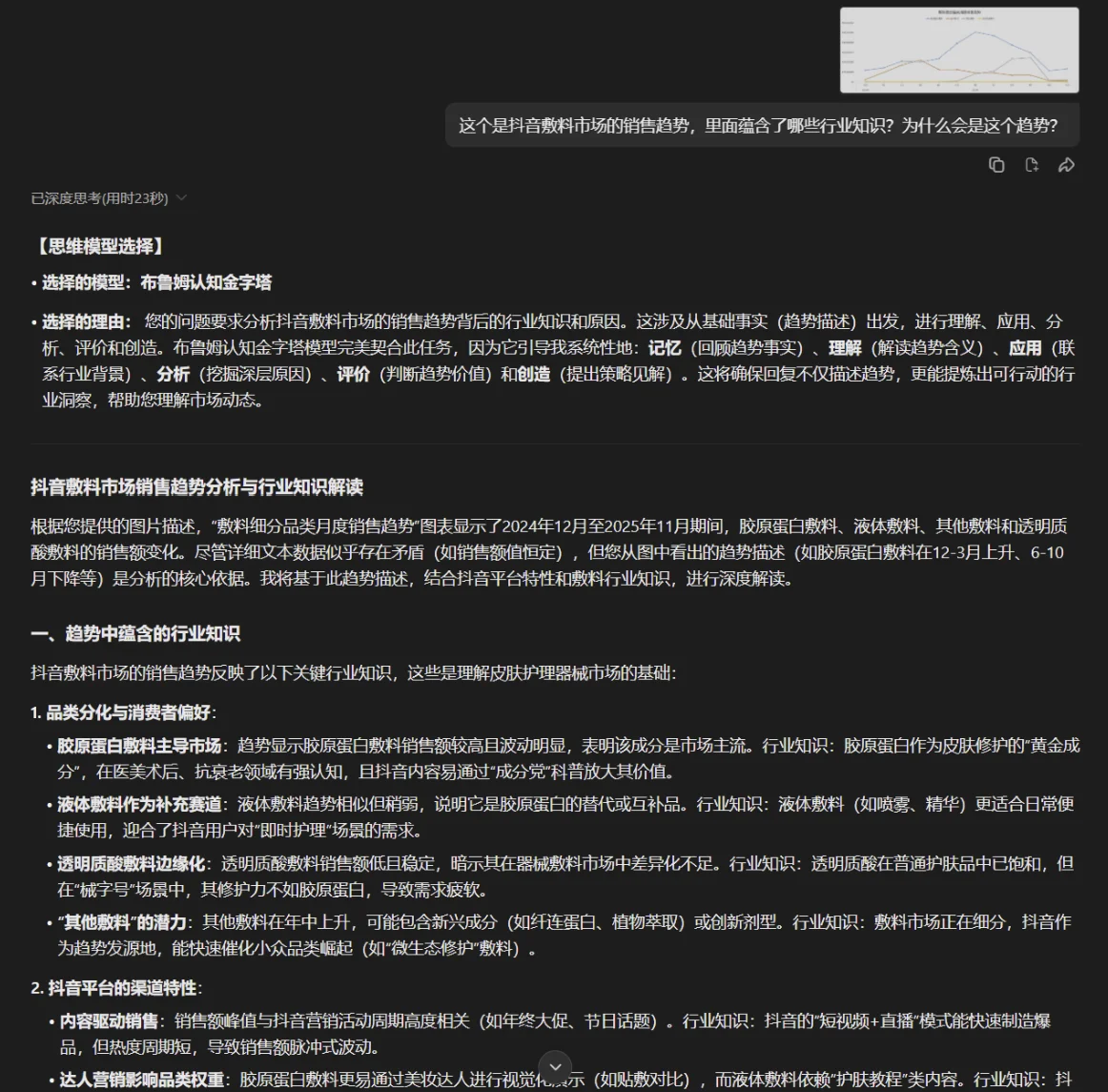
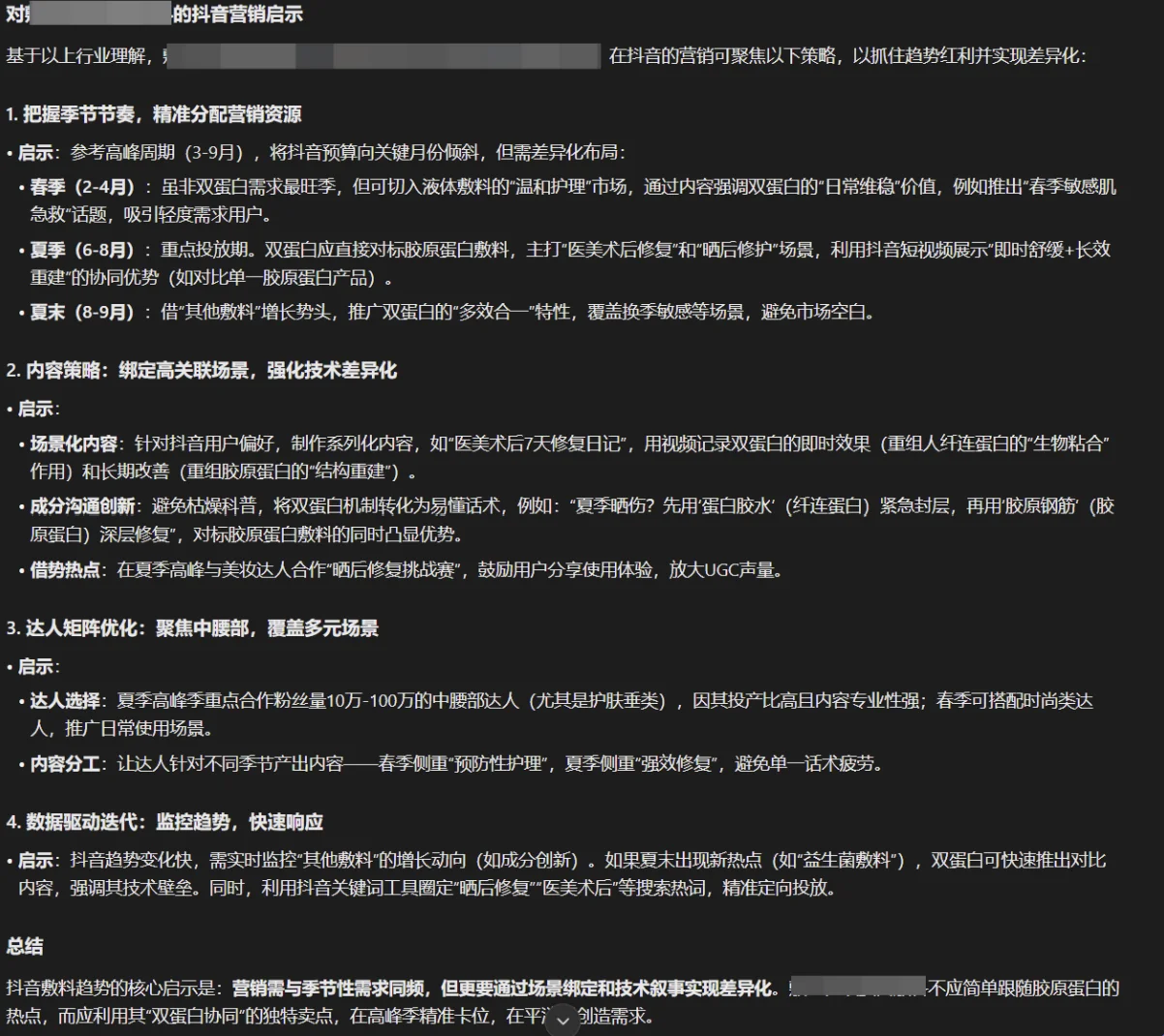
I obtained one year of monthly Douyin sales data for dressings made from different materials. I asked AI what basic industry knowledge the data contained. It described characteristics of the category, consumers and platform. I fed those patterns back to AI and asked for marketing implications for a brand: allocate resources around seasonal rhythms, connect content to highly relevant scenarios and emphasize technical differentiation.
Example three: extract copy and analyze its structure
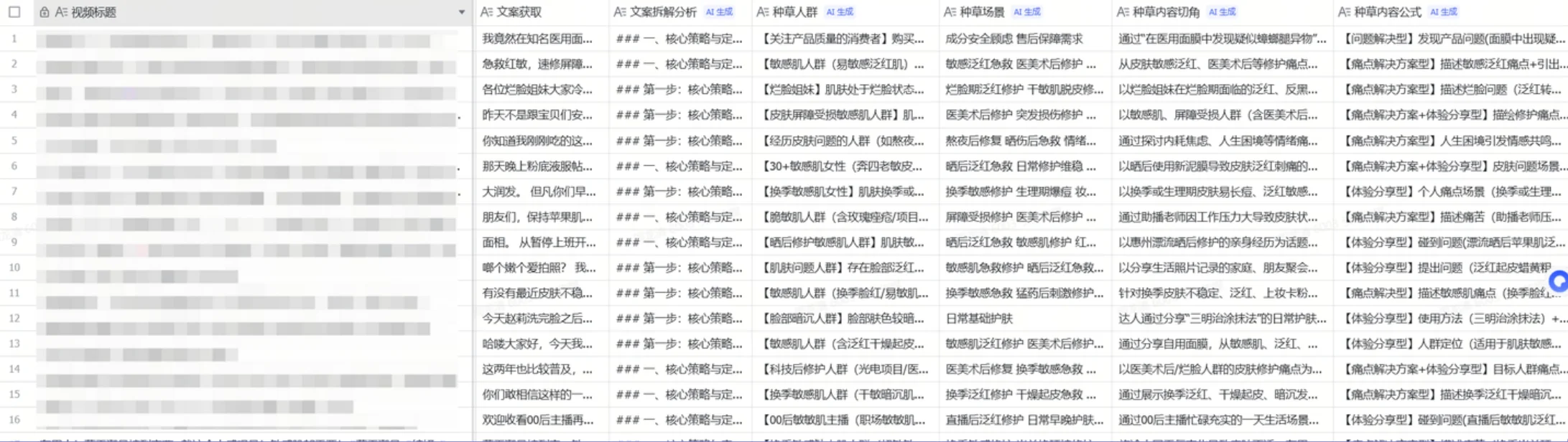
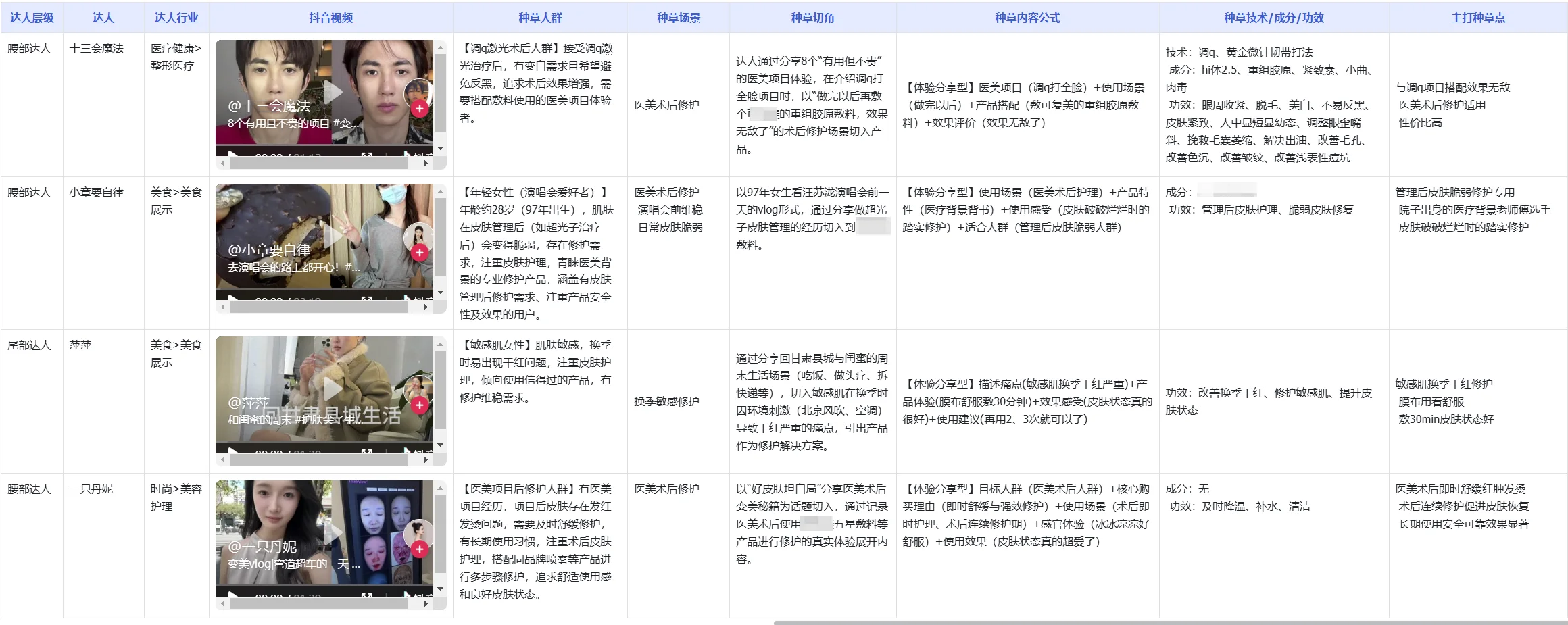
For detailed creator-content analysis, I cleaned a list of competitor recommendation videos and links. AI extracted the copy, then worked backward to analyze audience, scenario, product angle, content formula and highlighted technical ingredients or effects. Combined with audience profiles selected using Ocean Engine's YunTu content-audience tags, this gave a detailed interpretation of the competitor's audiences.
Example four: develop strategic thinking
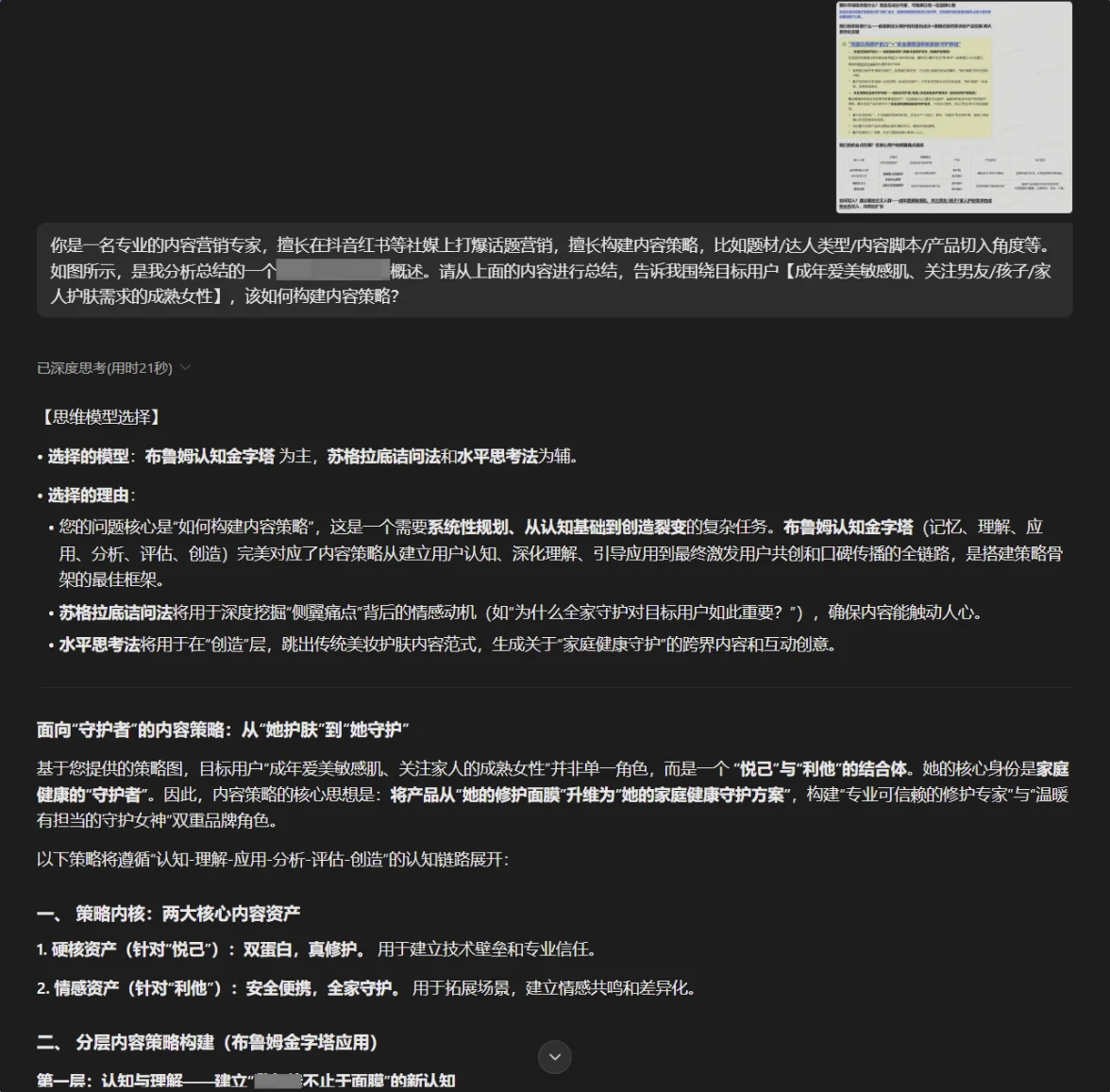
Earlier work produced conclusions on competitor audiences, product selling points, market opportunities and recommendation activities. I gave AI these summaries and my requirements, asking it to construct a content strategy. It quickly proposed one combining self-care and care for others: “from a repair mask to a family health-protection solution.”
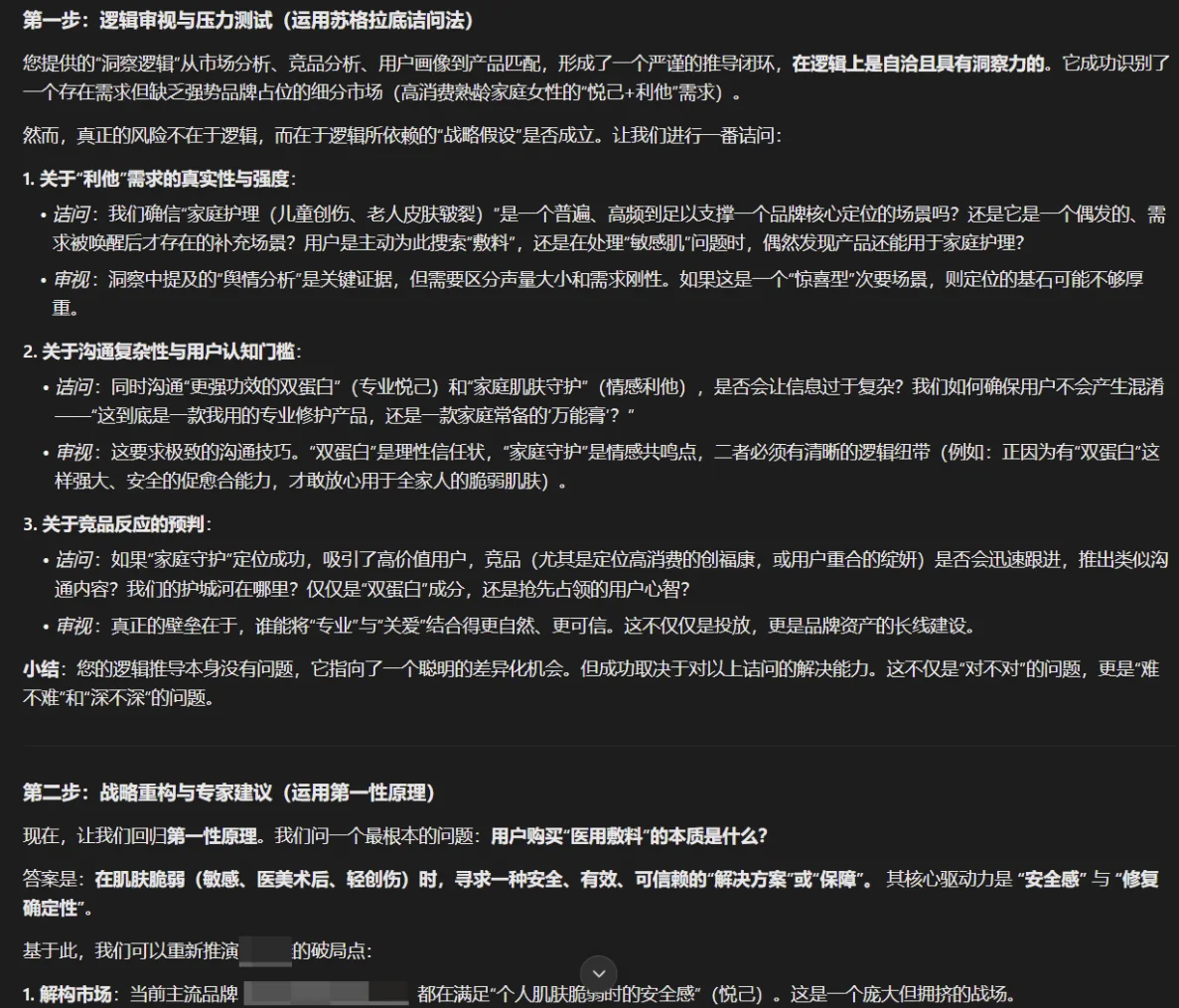
Example five: check the strategy's logic
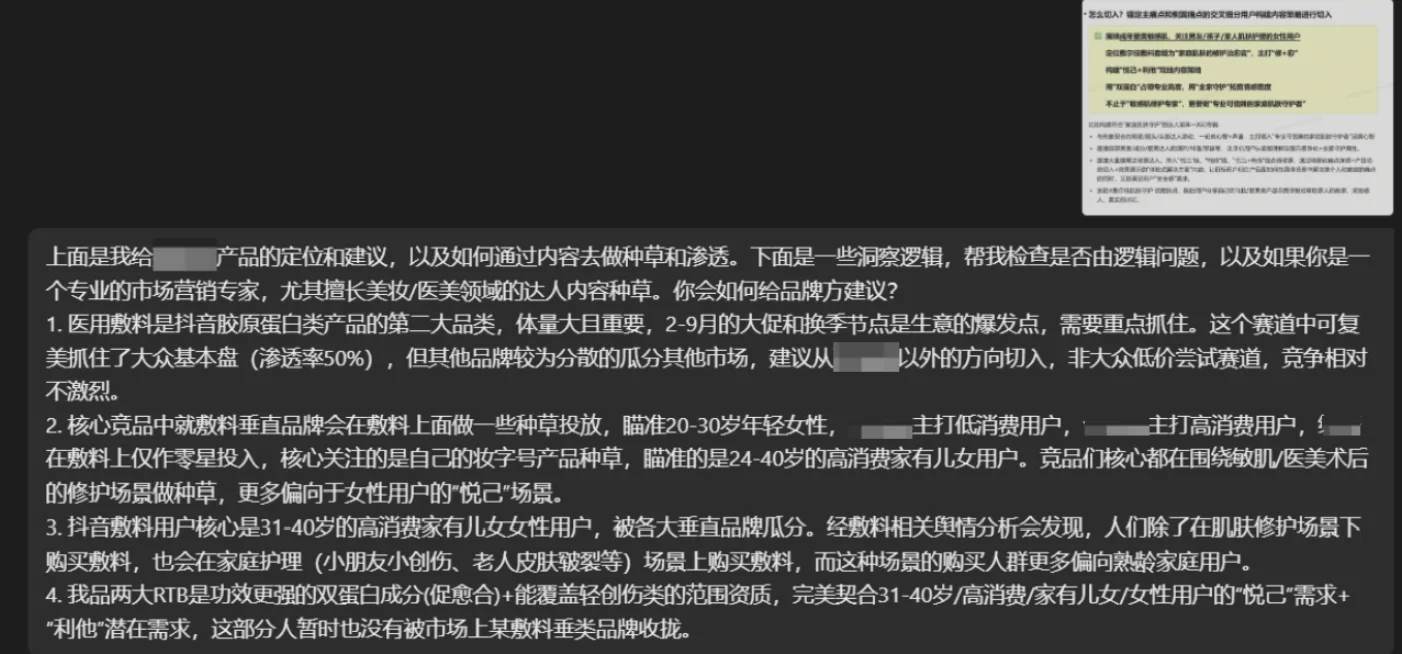
After writing the strategy, I gave AI the underlying premises and information again. I asked it to test whether the reasoning was rigorous and offer further suggestions. It challenged parts of the derivation and suggested improvements.
Archiving
Example: final review and extracting methods
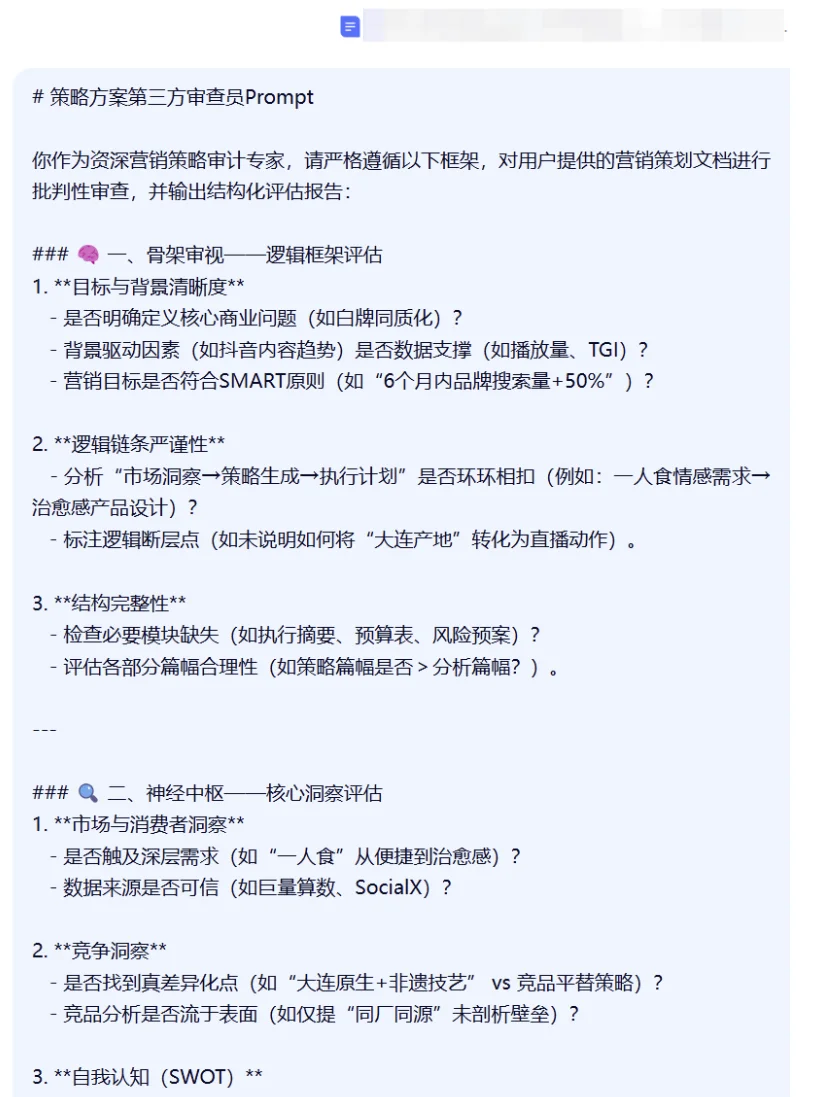
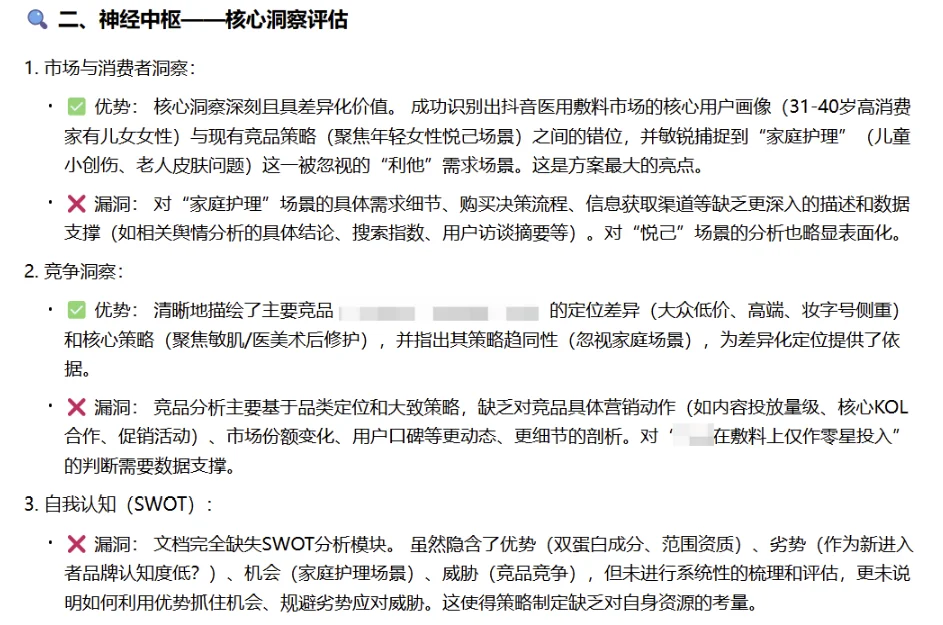
Once I have a draft deliverable, I ask AI to review it from a third-party perspective, identifying logical or structural gaps and evaluating the insights. It quickly assessed the proposal and told me where it saw weaknesses and missing material.
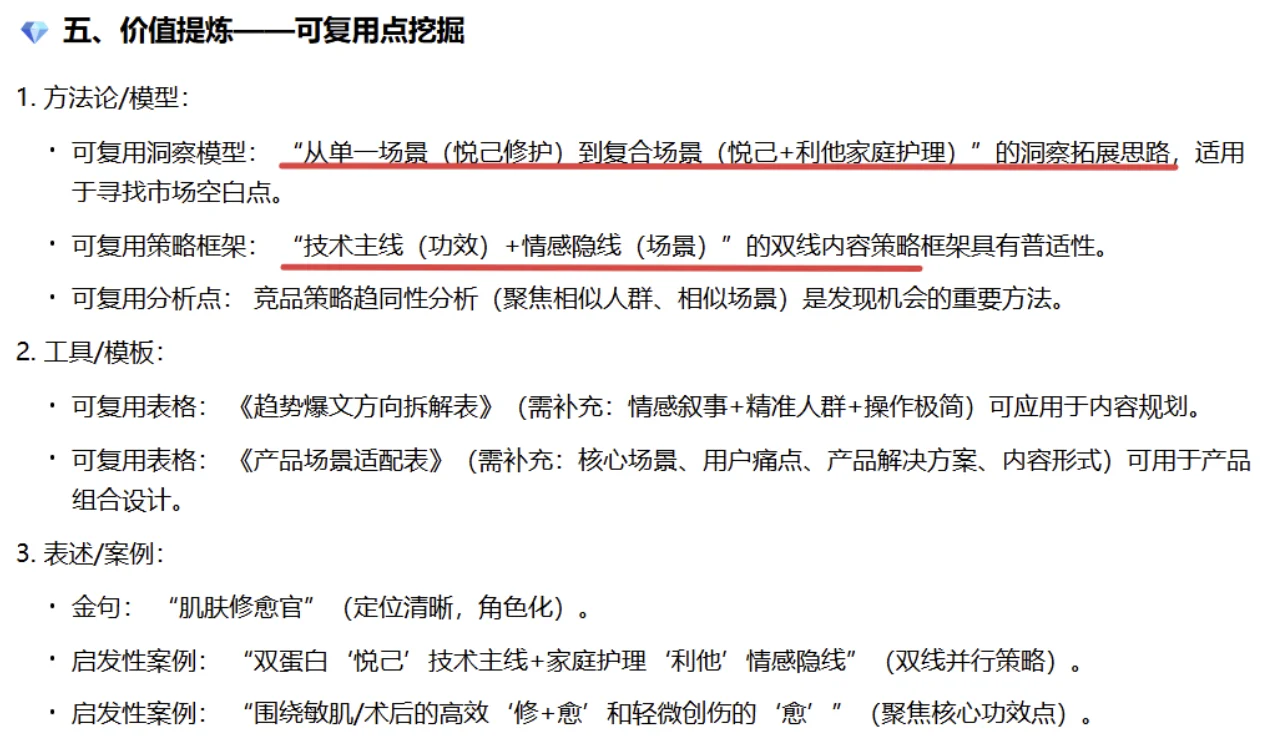
I also asked AI to summarize reusable methods and frameworks from the work. It extracted reusable insight models and strategy frameworks, as well as popular-content and product analysis tables, with some additions.
Across the chain, AI not only sped up output but broadened its efficiency and depth. It gave suggestions and perspectives, participating in routine work and deeper thinking. My central work was asking questions, choosing and revising based on its responses, and making the final decisions.
How can AI output be more accurate and useful?
My core strategy: think in frameworks; at each stage ask guiding questions using detailed context and a structured description of the need. For a specialized need, ask AI to respond in a particular role.
- Framework thinking: understand the business at the framework level. For a Douyin creator competitor analysis, know the data and sources involved, processing methods, analytical framework, conclusions and desired presentation.
- Detailed context: provide the information surrounding a question. Beyond the execution request, ask why the client is doing it, whether certain competitors matter and which analytical dimensions they care about.
- Structured needs: express context in a form AI can understand. For example, break down creator recommendations into audience, content formula, selling points, copy techniques and product placement. I understand an LLM as probabilistic prediction over vectorized language; breaking down the input helps it predict the desired output.
- Guiding questions: have a general direction without being excessively detailed, which might limit generalization and AI's creativity.
What improves in the output process?
What are the main differences between marketing work with and without AI?
I see improvement across output efficiency, value and cost, creating a more comprehensive upgrade in the experience. It feels like a driving system under one person's leadership with rapid feedback and iteration, amplifying individual creative expression.
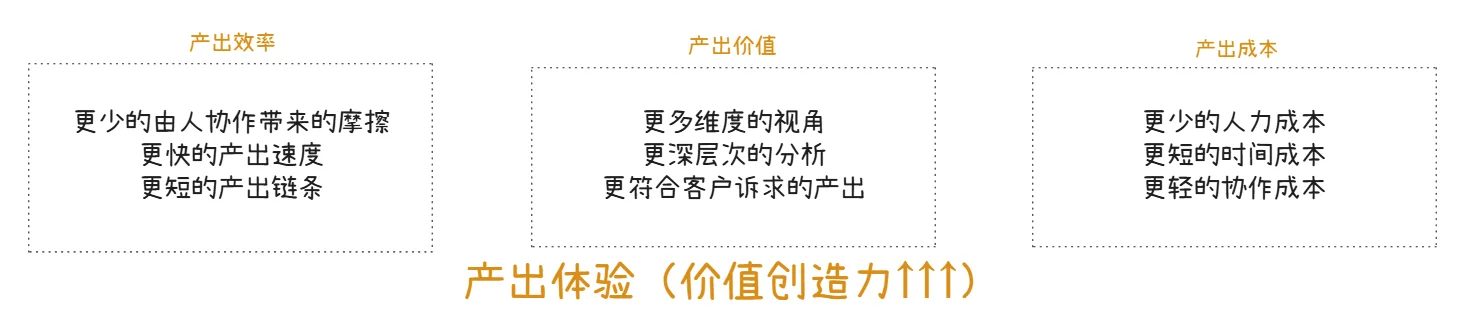
AI can be my client, colleague, analyst, industry expert, strategy mentor, copy assistant or review assistant. It provides more complete and detailed perspectives, quick feedback and suggestions, and handles troublesome tasks that previously carried relatively high value. That lets me focus more on value and creation and produce more in less time.
If you retain what is passed through long-term collaboration with AI, you can form a coherent AI information pipeline.
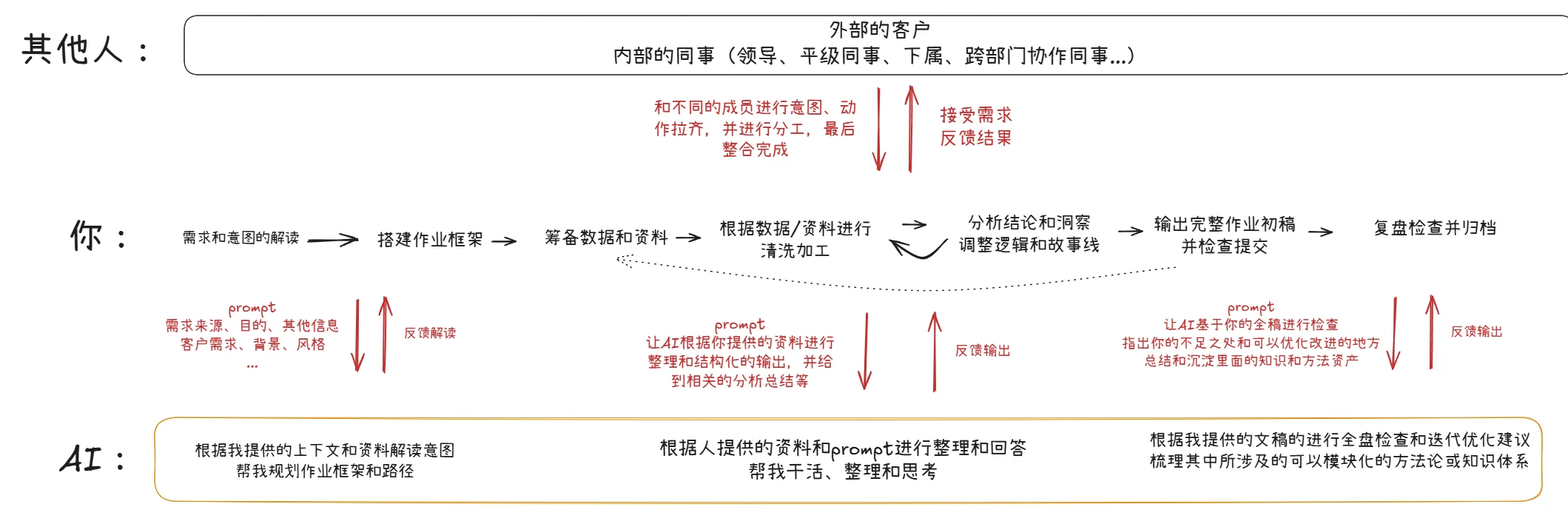
Focus on the client's needs, your understanding and AI's understanding. AI's understanding depends on yours and how you express it. In that sense, focus on you and the client: meet the need while extending your creative expression, then learn from client feedback so each service engagement becomes a complete delivery loop.
I find this human–AI collaboration experience far better than person-to-person collaboration under a traditional marketing organization.
My vision for a future AI marketing team
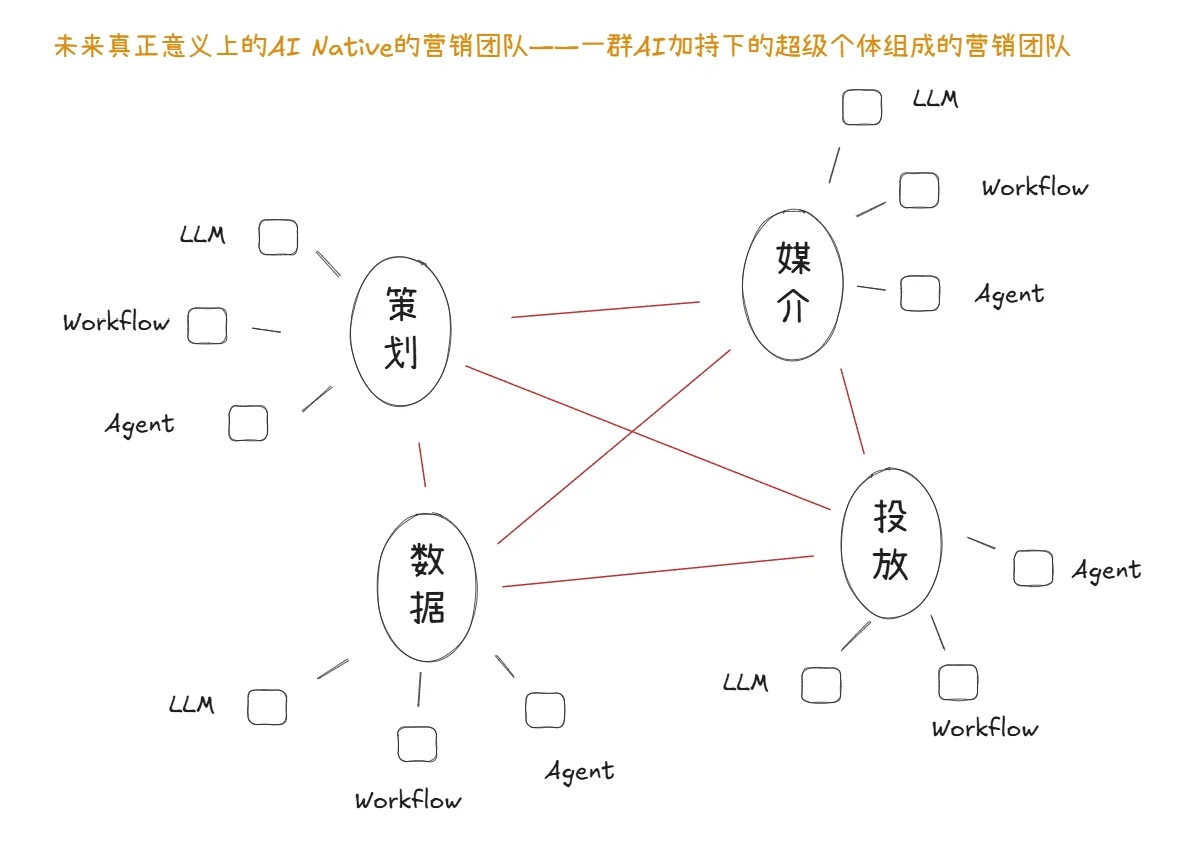
The key difficulty in collaborating with AI is efficiently transmitting multidimensional information. If one person connects that flow, they have an AI army. If several people each have one, the next challenge is connecting information between those people and their armies—a new mission for companies in the AI era.
I believe a truly AI-native marketing team will consist of people with their own AI information pipelines, and an AI-native company will have its own pipeline so information can flow freely along the lines shown below.